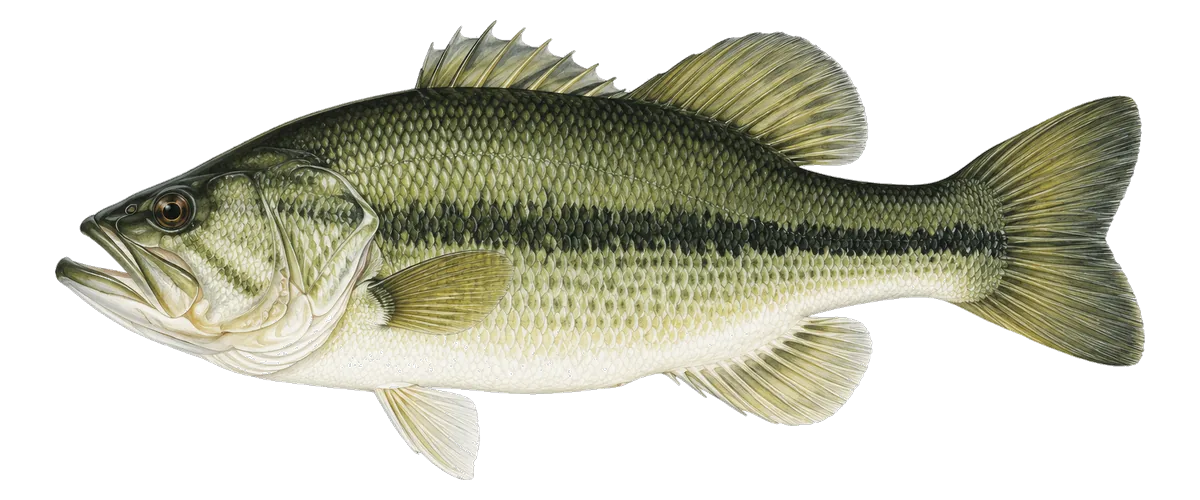
The best bass fishing tip for fall is to find the bait. As the water cools, shad and other baitfish move into the creeks, coves and shallow flats, and largemouth bass follow them and feed hard ahead of winter. Cover water with lures that look like shad: a lipless crankbait, a squarebill, a spinnerbait, and topwater early in the season. Then slow down to a suspending jerkbait as the water drops through the 50s.
Below: when the fall pattern starts where you live, where bass go in early and late fall, the best fall bass lures and how to fish them, how to fish through the turnover, the best time of day, fall in Florida, and the rules if you keep one.
When fall bass fishing starts
To a bass, fall is a water temperature, not a date. Kevin VanDam starts fishing a fall pattern once the surface has cooled about 10 degrees below its summer high, and in his season-by-season guide for Bassmaster he puts fall at roughly 75 down to 55 degrees. Cool nights and cold fronts set it off, and he's clear there's no magic number: it varies from lake to lake.
So fall moves across the country instead of arriving everywhere at once:
- The North cools first. Lakes from the Upper Midwest to New England often slide into a fall pattern in September.
- The middle of the country and the South usually follow in October and November. In Virginia, where summer water peaks in the upper 80s, state fisheries chief Mike Bednarski writes that the slide into the 70s and 60s is what breaks up the summer patterns and gets fish moving.
- Florida comes last. The water stays warm into October, and FWC's fall forecast for Lake Blue Cypress has bass turning more active and moving shallow as it cools in October and November, by which time they're already working toward a winter spawn. More on that below.
A surface temperature gauge on your graph, or a cheap thermometer, tells you more than the calendar. Watch the trend over a week, not one morning's reading.
Where do bass go in the fall?
Bass go where the food goes. Cooling water and fall rains feed plankton blooms in the creeks, the shad follow the plankton up the creeks and feeder streams, and the bass follow the shad into the coves and creek arms. Gene Gilliland, writing for Bassmaster, notes that bass don't travel far outside their home range to do it, so look in the creeks closest to where you found them in summer.
How to narrow it down:
- Find the bait first. VanDam calls baitfish the No. 1 key to fall. Look for shad flicking on the surface, gulls working over a creek and herons along the bank. Two herons fighting over the same point is a very good sign.
- Pick creeks with water coming in. Major creeks with an inflow draw the most bait and bass, especially after a heavy rain.
- Fish the windy side. Wind pushes plankton, and the shad and bass come with it. The windblown side of a flat, point or bank in a big creek is often the best water on the lake.
- Work flats and points. VanDam finds fall bass on big flats, long points that taper gradually, and tributary arms. South Carolina pro Casey Ashley looks for flats with isolated stumps, brush piles and grass clumps, especially a flat with a ditch running through it, and for creek backs with moving water.
- In rivers, bass hold beside current breaks: wing dams, points, creek mouths and the mouths of canals.
- In northern natural lakes, follow the weeds. As the shallow weeds die off, In-Fisherman's editors find bass collecting on the green growth that lasts along the deep weed edge, especially at inside corners where healthy weeds meet a steep drop. They call it perhaps the best time of year to catch numbers of big bass in a small area.
Fall fishing is feast or famine. Where the shad are, bass are often schooled tight; a stretch of bank without bait can be empty. Bednarski's advice is to stay mobile and keep moving until you find them.
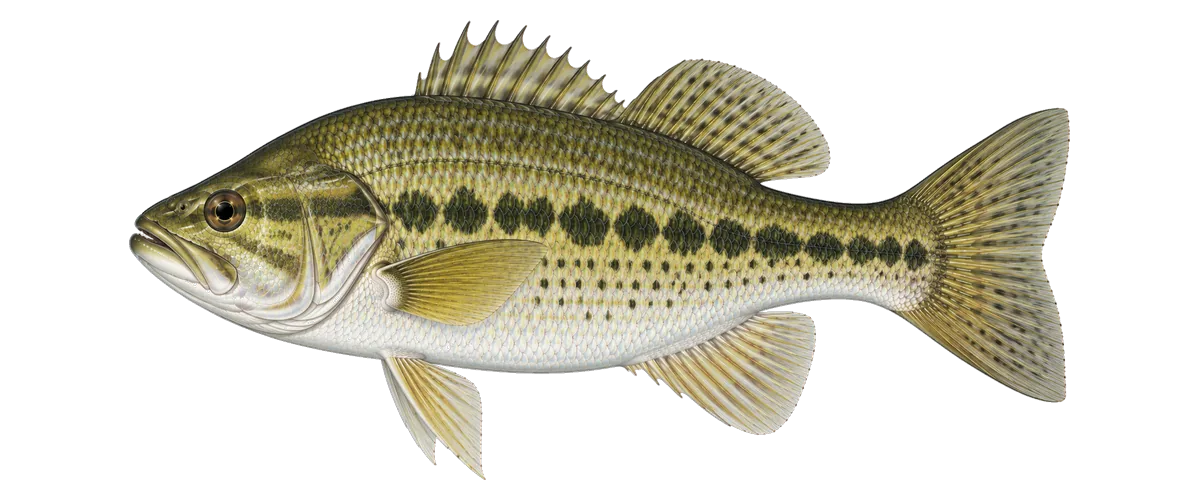
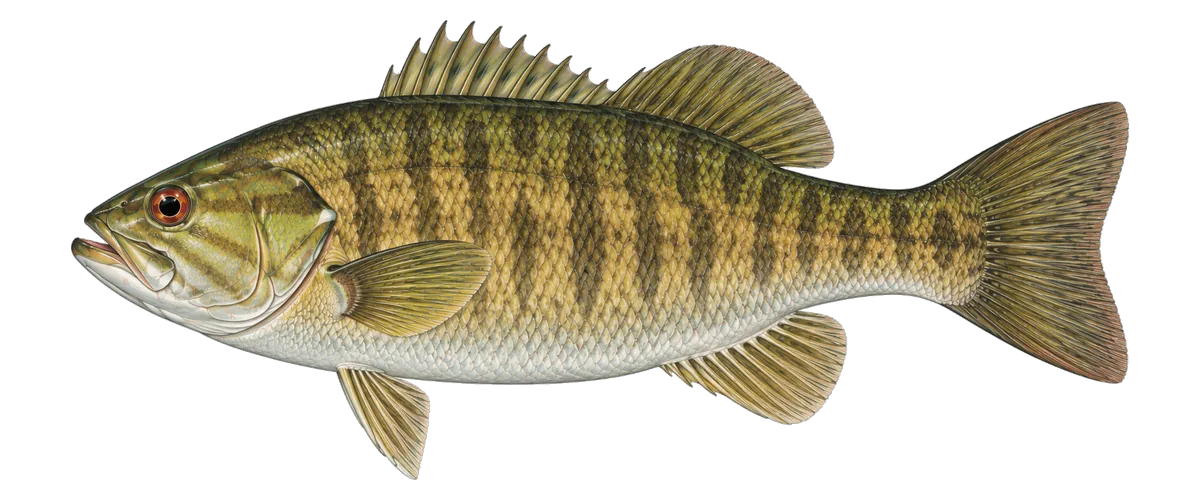
In many reservoirs, spotted bass and smallmouth chase the same shad as largemouth, and states don't always treat them alike: Texas, for one, sets different length rules for largemouth and spotted bass, though they share one daily bag. If you're not sure which one you're holding, Taklbox names it from a photo.
Where bass go in early fall and late fall
Early fall. The water is still warm, and the bait and the bass are scattered. Some fish sit on summer spots while others start up the creeks. It's the time for lures that cover water fast: a buzzbait or walking topwater, a spinnerbait, a squarebill.
Mid-fall. Bait and bass bunch up in the creeks and on the flats, and once the sun warms the water, schools of bass push shad to the surface.
Late fall. As the water slides through the 50s, bass slow down and pull toward steeper water. Bednarski finds them on steep shorelines and points outside the coves, especially over hard bottom, and on whatever cover is left near their feeding areas. Largemouth hang on to the last green weeds, too: he has caught them on thinning lily pads in 4 feet of water at 45 degrees.
Late fall is big-fish time. Bednarski writes that the biggest bass of the year often come as the water drops into the low 50s and upper 40s, and his own personal best came on a black jig-and-pig in 49-degree water.
Every lake runs its fall a little differently, and your own log is the best guide to yours. Taklbox saves each catch with its photo, place, bait and the barometer reading, so after a season or two you can see when your creeks turned on and what the fish bit.
The best fall bass lures
Fall bass are eating shad, so most of the best fall bass lures are shad imitations that cover water. Young-of-the-year shad have grown to about 3 to 4 inches by fall, Bednarski notes, so a lure that size in white, chrome or a shad pattern matches what the fish see. Taklbox's largemouth profile names a Texas-rigged worm, a live shiner, and a spinnerbait or squarebill as its top three baits, and fall leans hard on the third.
Lipless crankbait. A lipless crankbait sinks, vibrates and rattles, and it's the classic for bass schooled on shad over a flat. Ashley switches to one once the water drops below 55 degrees and fishes it on flats with isolated cover and in creek backs with moving water, in white or chrome. Count it down to the fish. Over submerged grass, reel it until it ticks the tops, then rip it free; the bite often comes right as it breaks loose.
Squarebill crankbait. A squarebill runs shallow and bounces off stumps, rock and wood. On cold mornings, with steam on the water and the shad still sluggish, VanDam throws a shallow crankbait at a medium speed to draw reaction strikes before the bass start chasing. Taklbox's profile puts it plainly: cast it to shallow cover and bump the structure. The deflection is what gets the bite.
Spinnerbait. A spinnerbait works the same flats a little higher in the water, and it shines in wind and stained water. VanDam likes willow-leaf blades for their baitfish shape. Ashley's "bread and butter" fall spinnerbait is 3/8 to 1/2 ounce with a No. 3 Colorado blade in front and a No. 4 1/2 willow leaf behind, usually a silver Colorado and a gold willow, and two silver blades in very clear water. On ponds, a small spinnerbait like the Booyah Pond Magic does the same job on light tackle.
Topwater, early. While the water is still warm, topwater is hard to beat, and bass blowing up on shad show you exactly where to throw. Oklahoma pro Jason Christie works a Zara Spook along main-lake bluffs and a buzzbait around rocks, wood and docks; he says the buzzbait catches quality fish all fall, in sun or clouds, as long as the water has some color. VanDam keeps a noisy chugger tied on all season. Ashley puts the buzzbait away when the water drops below 55, but Christie and Bednarski have both caught bass on one in 52-degree water, so don't give up on it too early.
Jerkbait, late. As the water cools toward the bottom of the fall range, VanDam says, a suspending jerkbait will catch fish, and it keeps catching them into winter. Jerk it down a few feet, then let it sit. The colder the water, the longer the pause. Bednarski also fishes one around thinning weeds.
Soft plastics, when they won't chase. Ashley flips a Zoom Trick Worm on a Texas rig, with a 3/16-ounce weight pegged above the hook, to stumps and blowdowns later in the day, and fishes it weightless as a floating worm when he wants it higher. A soft plastic swimbait on a light jighead matches shad closely, and a wacky-rigged stick worm on spinning gear is Bednarski's pick when the turnover makes the fish sulk.
Jig, last. As winter nears, drag a jig with a craw trailer down steep banks and points. It's a big-fish bait.
Striped bass and hybrids crash the same shad schools in many reservoirs; see the best bait for striped bass.
Fall turnover: what it is and how to fish through it
Through the summer, deeper lakes settle into layers: warm, oxygen-rich water on top, cold water below that is often short on oxygen, and a thin band between them, the thermocline, that often shows up on your graph. In fall, the surface cools and gets heavier until it matches the water below, and the wind mixes the whole lake. Gilliland explains that the mixing brings up decaying matter from the bottom, which uses up oxygen as it breaks down. It rarely kills fish, but it stresses and scatters them.
Bednarski says the turnover usually comes as the water drops into the low 60s and upper 50s, and that it's over in a week or two. Turned-over water is easy to spot: Bassmaster pro Kevin Wirth describes it as greenish-gray and dead-looking, with a rotten-egg smell and a lot of bubbles.
How to fish through it:
- Find the water that hasn't turned, or has recovered. On a big lake, turnover usually starts in the shallow upper arms and the backs of the creeks, which cool first, and works toward the deeper lower lake. Fish the clear water ahead of it, the creek mouths outside a turned creek, or the upper end once it clears. Each creek turns on its own schedule, so check several.
- Look for fresh, moving water. Shallow creeks under about 6 feet with a fresh-water inflow hold up better, Bednarski finds, and Wirth says wind, current or a heavy rain that flushes out the dead water can shorten the roughly two weeks an area takes to bounce back.
- Fish shallow and small. Wirth's turnover lures are shallow baits with a small action, such as spinnerbaits, buzzbaits and crankbaits, plus white tubes pitched to cover. Bednarski fishes a wacky-rigged stick worm at shallow targets.
- On a pond or small, shallow lake, the whole thing can turn at once. That's the one place Wirth accepts turnover as an excuse for a slow day. Fish somewhere else for a week or two, or wait it out.
Lakes that never stratify in summer, like many shallow, windswept ones, don't have much of a turnover at all.
Best time of day to fish for bass in fall
In early fall, while the water is still warm, the summer rules hold: the first and last hours of light are best. As the water cools, the bite moves later.
- Midday and afternoon get better. Christie says you don't need to be on the water at daylight in fall; midday to late afternoon is when he catches his big fish, once the sun has warmed the top layer and the bait gets active.
- Mornings have their own bait. On cold mornings with steam on the water, VanDam starts with a shallow crankbait at a medium speed. When the sun warms the surface and the shad come alive, he switches to a spinnerbait or topwater.
- Fish ahead of the fronts. Christie's best bites often come the day before a front or the day it arrives, when the big, dark clouds roll in. The bright, cold day after a strong front is usually tougher: slow down and fish tighter to cover.
By late fall, the warmest part of the day is usually the best part of the day.
Fall bass fishing in Florida
FWC calls the state's fish Florida bass, and they live in almost every body of fresh water in the state. Fall works differently there. The water stays warm well into October. FWC's forecast for Lake Blue Cypress is typical: as the water cools in October and November, bass become more active and move into shallow water ahead of the spawn.
That spawn comes early. It depends on water temperature: FWC says it can start as early as January in extreme south Florida and run as late as May in the Panhandle, with March and April the peak. So Florida's fall is short, and it runs straight into the prespawn.
- Let the fronts set your schedule. Each cold front cools the water a little more, and over the season that moves fish shallower. Fish the warm, settled days ahead of a front, and expect a slower bite on the bright, cold morning after one.
- Fish the grass. Florida's best-known bass lakes are grass lakes; FWC singles out Lake Toho and Lakes Dora and Beauclair as fisheries built on vegetation. Run a lipless crankbait or spinnerbait along the grass edges where shad and shiners gather, and pitch a Texas-rigged worm into the thicker cover.
- Fish a live shiner for a big one. Golden shiners are on FWC's list of baits that work at Lake Blue Cypress, and Taklbox's largemouth profile calls a live shiner, free-lined near heavy cover, the big-fish bait.
- Where to go. FWC's bass page points to Orange Lake, Lake Rousseau, Lake Istokpoga and Lake Okeechobee, among others, for trophy fish.
Florida limits how many bigger bass you can keep each day, and some lakes have their own rules, including a few that are catch-and-release only (see the card below). On iPhone Pro models, Taklbox measures the fish from the photo you take before you let it go.
Keeping a bass: rules in Florida, Texas and New York
Most bass anglers release most of their fish, especially the big ones. If you keep one, the rules vary by state and often by lake. The cards below come straight from the data Taklbox checks your catch against, with each agency's official link.
Florida counts all its black bass toward one daily bag, with a cap on bigger fish, and several lakes and rivers carry their own rules.
Texas sets a statewide minimum length for largemouth, and many lakes have their own slots and limits.
New York is one of the states where fall changes the rules: its bass harvest season closes before winter, and only catch and release with artificial lures is allowed until it reopens.
If a bass is going back, keep it in the water or lift it out only for a quick photo, support a big fish's belly instead of hanging it by the jaw, and let it swim off on its own.
Not sure whether the bass in your hands is legal where you caught it? Snap it: Taklbox names it, measures it on iPhone Pro models, and checks the size, bag and season rules where you caught it. It has largemouth bass rules on file for 48 states.
Frequently asked questions
Is fall a good time to fish for bass?
Yes. Bass feed hard on shad ahead of winter, and the fish are often schooled and easy to pattern once you find the bait. Late fall is one of the best times of year for a big one.
Do bass go shallow or deep in the fall?
Mostly shallow in early and mid-fall, following the shad into the creeks, coves and flats. In late fall, as the water drops through the 50s, they pull out to steeper banks and points near deeper water, on their way to winter spots.
What color lures work best for fall bass?
Shad colors. White, chrome and silver match the baitfish most fall bass are eating; Ashley throws white or chrome lipless baits and silver spinnerbait blades in clear water. In stained water, add some chartreuse, or a gold blade for more flash.
What are the best fall bass lures for ponds?
A small spinnerbait, a squarebill and a Texas-rigged or weightless Trick Worm cover most ponds. A pond can turn over all at once, so if yours goes murky and smells bad, give it a week or two.
What water temperature do bass stop biting in the fall?
They don't stop. Bednarski finds fast lures work well above about 55 degrees; below that, slow down. Fish slow noticeably in the 40s but still bite, and some of the biggest bass of the year come in that cold water. For more on what to fish when, see the rest of the seasonal fishing guides and the bait and lure guides.