In the fall, crappie follow the shad. Once the water drops below about 70 degrees, they move from their summer haunts toward the creek arms, gathering on brush, stumps, docks, bridges and channel bends, and as it keeps cooling they slide back to deeper brush along the channels. To catch them, find the bait and the depth the crappie are holding at that day, then fish a small jig or a lively minnow slowly at exactly that depth.
Below: where crappie go in early and late fall, how black and white crappie differ, how to find them, the best fall spots, baits and rigs, fishing from the bank and at night, releasing deep fish, and the rules.
Where do crappie go in the fall?
Carolina Sportsman's Phillip Gentry describes fall as spring in reverse: the fish move from deep water toward the shallows, looking for comfortable water, oxygen and food.
Early fall: still in summer mode. In hot weather, OutdoorsFIRST notes, crappie suspend and chase shad, which makes them hard to pin down. Not much changes until the water cools.
The move into the creeks. Fish & Tackle's Vic Attardo finds the real migration doesn't begin until the water falls below 70 degrees, and creek arms are often best once it reaches the mid-60s. Shad and minnows push up the creeks first, and the crappie follow.
Turnover. As the surface cools, a lake's layers mix, and for a while the water is a similar temperature top to bottom. Crappie Masters champion Dan Dannenmueller told In-Fisherman that once that happens, crappie seek out the depth closest to 68 degrees.
Late fall: back to deeper wood. As the water keeps cooling, crappie leave the shallows for deeper brush, stumps and flooded timber near the old river channels. OutdoorsFIRST finds they hold on top of the channel breaks while the water stays in the 60s, and slide down into the channel as it gets colder. On northern lakes, In-Fisherman's Gord Pyzer follows them into the deep basins as fall goes on.
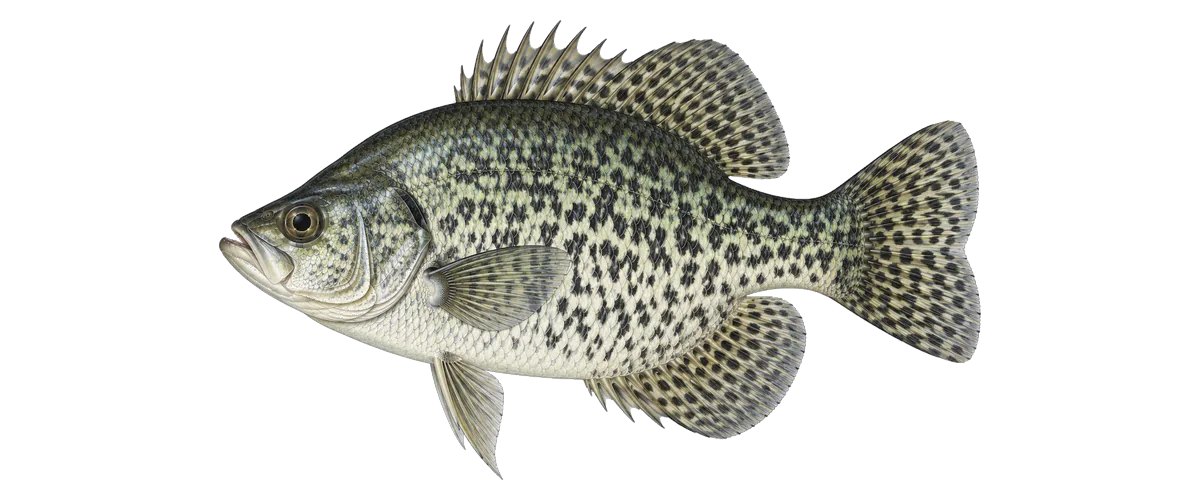
Black crappie vs white crappie in the fall
The two crappies don't always do the same thing.
- Black crappie prefer clearer water with more weeds and hold tight to cover. On Mississippi's oxbow lakes, Brad Taylor finds them in or around the brush along the channel edge.
- White crappie handle muddy, warm water better and dominate many southern reservoirs. They relate to brush too, but Taylor finds them suspended higher in the water column, so he looks for deeper water, marks shad on his sonar, and follows the bait.
How to find crappie in the fall
Find the bait first. North Carolina angler Stokes McClellan's rule for fall crappie: he looks for bait first, because the fish will be there if the bait is there.
Find the depth of the day. Crappie school at one depth on a given day. When you catch one, note the depth; OutdoorsFIRST's advice is that others will be at that same depth, on the next brush pile too.
Use your electronics. Dannenmueller calls them essential. He finds schools on sonar, then pulls baits through them, and bumps a jig on the bottom while watching for fish to rise to it.
Read the turnover. Tennessee champion Steve Coleman looks for oxygen-rich water in fall: the headwaters of creeks and anywhere water flows in. Calm, dark, murky water with dead shad on the surface can mean the lake is turning over, so move.
Every crappie you log is saved with its place, bait, tide, moon and barometer reading in Taklbox, and over a few falls you'll see when your lake's fish move.
The best places to catch crappie in the fall
- Creek bends and steep banks. Attardo finds a creek that zigzags beats a straight one, and fallen trees and brush beside a steep creek bank usually hold a pack of crappie. Fish the inside or outside point of each bend, depending on the flow.
- Brush piles and stumps on channel breaks. Ease along the breaks and turns with the trolling motor and watch the sonar. A single piece of timber can hold a school.
- Docks. Pickwick Lake guide Brad Whitehead finds fall dock fishing can be as good as spring. He picks docks with at least 12 feet of water off the front and plenty of shade, and skips a 1/24- or 1/32-ounce jig under them.
- Bridges. Brush under a bridge makes it a vertical brush pile that reaches the surface, says Tom Mundy, who jigs straight down beside the pilings and watches his rod tip for the bite.
- Riprap. Rock breaks the current and soaks up the afternoon sun, warming the water next to it. Kent Driscoll fishes riprap like a stairwell: find the depth the fish are using, then work along it.
- Standing timber. Wall fishes the points of a timber stand and the isolated trees on its edge.
- Rivers and the upper ends of reservoirs. Grenada Lake guide John Harrison finds river crappie see far less pressure, and he jigs shoreline cover and stump fields with a long jig pole.
Fall crappie baits and rigs
Minnows. A lively minnow is hard to beat. OutdoorsFIRST suggests a 2- to 2½-inch minnow in the fall: fall crappie want a meal, not a snack. Hang it on a light hook just above the brush.
Jigs. Small hair jigs, tubes, grubs and little swimbaits, from 1/32 to 1/16 ounce. Dannenmueller matches the size of his plastics to the local baitfish.
Rigs that work in fall:
- Slip bobber. It lets you set the bait at the exact depth of the fish and keep it there. Set the hook at any sign of movement.
- Vertical jigging with a long jig pole, straight down into brush, docks and bridges.
- Long-line trolling. McClellan long-line trolls parallel to or over the channel edges in the backs of the creeks, where scattered fall crappie hold.
- A double rig. Dannenmueller fishes a minnow on one hook and a jig on the other off a three-way swivel, with a sinker to hold it in place.
Slow down as it cools. OutdoorsFIRST finds slow is generally best in colder water: hold the jig still, then jig it lightly. A crappie's bite often feels like extra weight, so lift the rod rather than snapping a hookset; their thin mouths tear easily.
How to catch crappie from the bank in the fall
You don't need a boat for fall crappie. The cooling water brings them to places a bank angler can reach:
- Docks and fishing piers at parks and marinas.
- Bridges on creek arms, casting up-current and letting the bait swing past the pilings.
- Riprap, where the fish are often within a cast of the bank and the depth is easy to read.
- Creek mouths and bends that you can walk to.
A slip bobber is the bank angler's best tool, because it lets you put a minnow or jig at the fish's depth from shore. Early and late in the day are often best.
Taklbox Pro shades public land on the map, a starting point for finding shoreline you can fish from.
Crappie fishing at night in the fall
Crappie feed hard after dark, and lights draw them in. A light over the water, at a dock or from a boat tied off at a bridge, draws plankton, then shad, then crappie. Fish a minnow or small jig at the edge of the light, at a few depths until you find them.
Weather and fall crappie
- Calm days are best. OutdoorsFIRST finds the best fall crappie days are calm; wind makes small jigs hard to fish in deep wood.
- Fish ahead of the front. Dannenmueller fishes the warm-up before a cold front, and finds even a slight wind change can stop the bite for an hour or two.
Releasing crappie caught deep
In late fall, crappie can hold deep, and fish pulled up from deep water often suffer barotrauma, the swelling that comes from the pressure change. Pyzer finds basin crappie often sit at 28 feet or deeper; he targets schools shallower than that, reels in fast, and releases fish quickly, using a release device that returns a fish to depth.
Some agencies go further. Texas Parks and Wildlife biologist Tim Bister told In-Fisherman that on Lake O' the Pines and Lake Fork, anglers must keep every crappie they catch in winter, up to the daily bag.
Crappie rules
Every state sets its own crappie bag, many add a minimum size, and lakes often have their own rules on top of the statewide one. The cards below cover some of the busiest crappie states, from the data Taklbox checks your catch against, each with the official link.
Snap the fish and Taklbox names it, measures it on iPhone Pro models, and checks the size, bag and season where you caught it.
Bass move with the same shad. For them, see fall bass fishing, and for more seasonal guides, the seasons category.
Frequently asked questions
Where do crappie go in the fall?
They follow the shad toward the creek arms as the water cools below about 70 degrees, holding on brush, stumps, docks, bridges and channel bends, then move back to deeper brush along the channels in late fall.
How deep are crappie in the fall?
It changes through the fall and from lake to lake. In early fall they may be shallow in the creeks; after turnover they often hold at the depth with water closest to 68 degrees; in late fall they slide deeper along channel breaks. Find one fish, and the rest are usually at the same depth.
Can you catch crappie from the bank in the fall?
Yes. Fish docks, bridges on creek arms, riprap and creek bends with a minnow or small jig under a slip bobber set to the fish's depth.
What is the best bait for crappie in the fall?
A lively 2- to 2½-inch minnow or a small jig, 1/32 to 1/16 ounce, fished slowly at the fish's depth.
Do crappie spawn in the fall?
No. Crappie spawn in spring, moving shallow when the water reaches the low 60s. In fall they move shallow to feed, not to spawn.