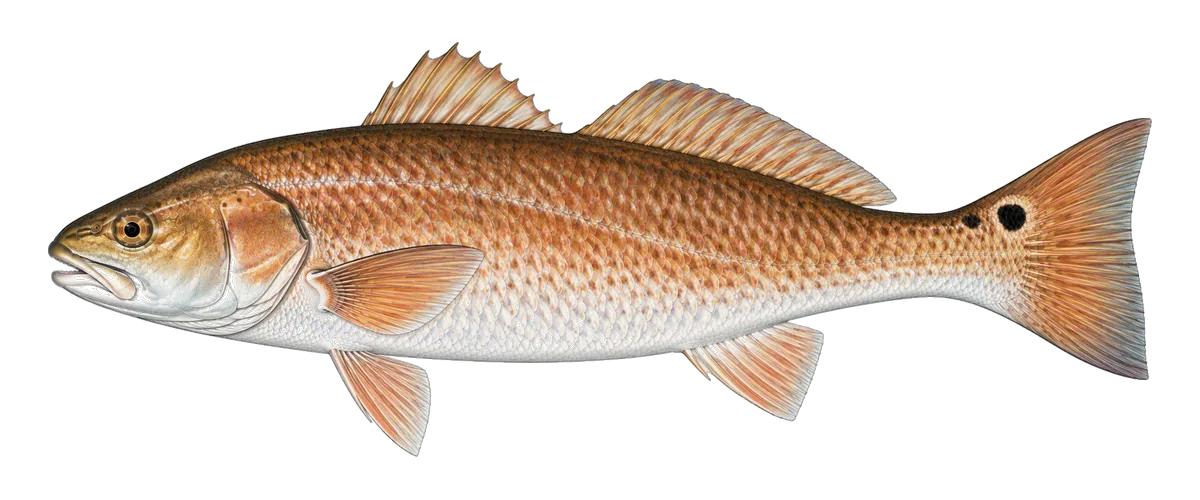
To measure a fish, lay it on its side on a flat measuring board with its mouth closed and its nose against the end, then read the straight-line distance to the tip of the tail, with the tail squeezed together. That's total length, the measurement most size limits use. Some fish are measured to the fork of the tail instead. Never run a tape over the curve of the body; it adds length that isn't there.
Below: total length and fork length and which fish use which, a step-by-step for a legal measurement, the specifics in Florida and Texas, how to estimate weight from length and girth, and how to measure a fish from a photo.
Total length vs fork length
There are three ways a size limit can measure a fish. The Florida Fish and Wildlife Conservation Commission (FWC) defines them like this:
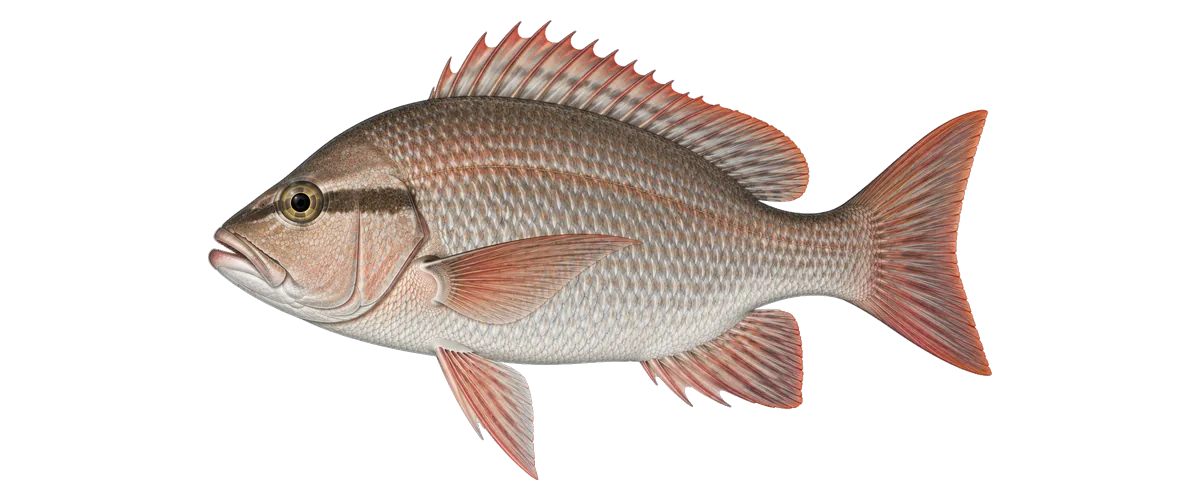
- Total length: from the most forward point of the head, with the mouth closed, to the farthest tip of the tail, with the tail compressed or squeezed and the fish on its side. Snook, red drum, snapper, grouper and flounder are measured this way.
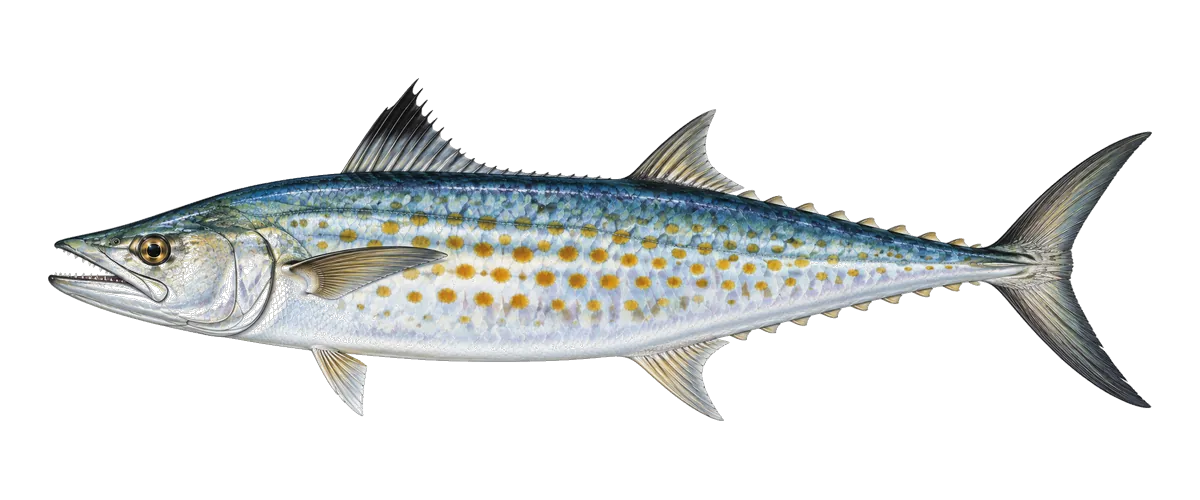
- Fork length: from the tip of the jaw or snout, mouth closed, to the center of the fork in the tail. Amberjack, cobia, king mackerel and dolphin are measured this way.
- Lower jaw fork length: a straight line from the tip of the lower jaw to the fork, for billfish such as sailfish and marlin, whose upper jaw is a bill.
Fork length always comes out shorter than total length on the same fish, so a fish that's "legal" by the wrong measurement can be short by the right one.
Which fish use which
It depends on the state and the species. In Florida, going by the rules behind Taklbox's rules cards, the split is roughly even:
- Fork length covers about 38 Florida rules, including cobia, king and Spanish mackerel, greater amberjack, Florida pompano, permit, hogfish, gray triggerfish, bluefish, striped mullet and the sharks.
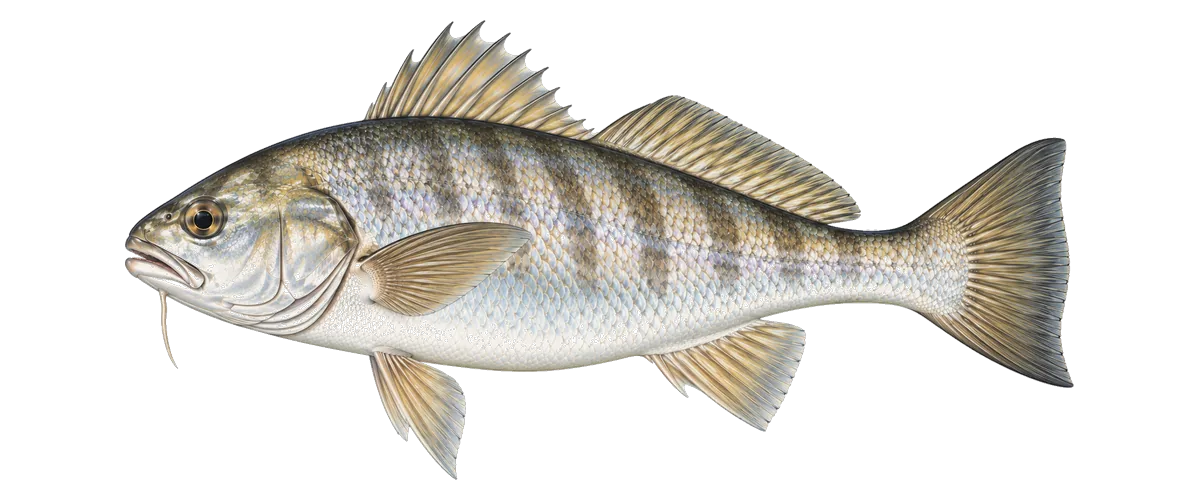
- Total length covers most of the inshore favorites: red drum, snook, spotted seatrout, flounder, sheepshead and the snappers and groupers.
- Lower jaw fork length covers the billfish.
In Texas, almost everything is total length. The billfish are the exception, measured from the lower jaw to the fork.
The measurement each rule uses is printed in the official regulations, and in Taklbox's rules cards below. Check it before you measure an unfamiliar fish.
How to measure a fish, step by step
- Use a rigid measuring board. FWC warns that a soft tape has to lie flat on a hard surface; draped over the fish, it follows the body's curve and gives a wrong reading. A board with a raised stop at the zero end (a "bump board") makes the rest easy.
- Wet the board and your hands. It protects the fish's slime coat if it's going back.
- Lay the fish on its side with its mouth closed, and push its nose against the stop.
- Find the tip of the tail. For total length on a soft-tailed fish, Texas Parks and Wildlife says to squeeze the tail fin together to get the maximum length. For a hard-tailed fish, it says to turn the tail to get the maximum length. For fork length, read at the center of the fork instead.
- Read the straight line, from the stop to the tip of the tail or the fork. Florida counts ragged tail filaments, like those on a scamp or black sea bass, as part of the tail.
- If it's close, measure again. Then decide.
On a fish you plan to release, have the board ready before you land it, and keep the fish out of the water only as long as the measurement takes.
How to measure a fish legally
A legal measurement is mostly about doing it the way the rule says: the right length (total or fork), mouth closed, straight line. A few more things officers check:
- Measure before it goes in the cooler. If it doesn't fit the rule then, it goes back then.
- Keep regulated fish whole until you land them. Florida requires many regulated species to be landed "in whole condition," so an officer can still measure them. For Spanish mackerel, for example, you may gut it and remove the gills, but you can't behead, fillet, skin or scale it before you land it.
- The tail counts as the rule says. Florida and Texas both define total length with the tail squeezed together. Read the definition for any other state.
How to measure fish length in Florida and Texas
Florida. Total length for most inshore species, fork length for many offshore and pelagic ones, lower jaw fork length for billfish. FWC's measurement page has diagrams of each. Florida also draws several species' rules by region, so where you caught the fish matters as much as how long it is.
Texas. Texas Parks and Wildlife's pocket guide defines total length as the straight-line distance from the tip of the snout, with the mouth closed, to the extreme tip of the tail. Squeeze a soft tail; turn a hard one.
Measuring is only half of it; the other half is knowing the rule where you're standing. Snap the fish and Taklbox checks the size, bag and season where you caught it.
How to measure a fish in a picture
A photo is the way to keep a record of a fish you release, and in catch-photo-release tournaments it's the only measurement that counts. Getting a length you can trust from a picture comes down to one rule: the fish and the scale have to be in the same plane.
Put a measuring board in the photo. Lay the fish on the board, mouth at the stop, and shoot straight down so the board's marks run the length of the frame. Kayak tournaments work exactly this way. Bassmaster's guide to them describes the approved boards, a wet board, a code card in the shot, and several pictures checked for focus with the whole fish showing. Some tournaments want the mouth closed, others allow it open, so read the rules.
Don't trust a hero shot. A fish held out toward the camera looks bigger than it is, because anything closer to the lens looks larger. That's why "grip and grin" photos can't settle a length, and why tournaments don't accept them.
Use what's in the shot only if it's next to the fish. A known object lying flush beside the fish gives a rough check. One held closer to the camera or farther from it doesn't.
On iPhone Pro models, Taklbox measures the fish's length from the photo with the LiDAR Scanner, so the length is in your log before the fish goes back.
How to estimate a fish's weight from its length
Weighing a fish you plan to release is hard on it. Measuring length and girth isn't, and a formula turns the two into a weight.
- The standard formula, from South Carolina's saltwater fishing program: girth × girth × length ÷ 800 = weight in pounds. Measure length from the lower jaw to the fork, and girth around the fattest part of the body. If you can only reach one side, measure top to bottom on that side and double it.
- Species versions, from Wisconsin's Department of Natural Resources: for bass, length × length × girth ÷ 1,200; for trout, length × girth × girth ÷ 800. For pike, walleye and sunfish, it uses length alone, cubed.
These are estimates. Wisconsin calls them approximate: a fat fish weighs more than the formula says, and a thin one less.
For a fish without a girth measurement, Taklbox estimates the weight from its species and length.
Frequently asked questions
Do you measure a fish with its mouth open or closed?
Closed, for any size limit. FWC and Texas Parks and Wildlife both define length with the mouth closed. Some catch-photo-release tournaments allow an open mouth on the board, so check their rules.
Do you pinch the tail when measuring a fish?
For total length, yes: squeeze a soft tail together, or turn a hard tail, to reach the longest straight-line length. For fork length, you measure to the center of the fork, so the tail isn't pinched.
Can you measure a fish over the curve of its body?
No. Size limits are straight-line measurements. A tape laid over the body adds length and can make a short fish look legal.
How do you measure a fish without a ruler?
Mark your rod or the gunwale of your boat at the lengths you need before you go fishing. Better, carry a measuring board. A rough guess is no defense near the limit.
Is there an app to measure fish length?
Yes. On iPhone Pro models, Taklbox measures a fish's length from a photo with the LiDAR Scanner and estimates its weight from the species and that length. See the how-to guides for more, or how to catch flounder, a fish worth measuring twice.