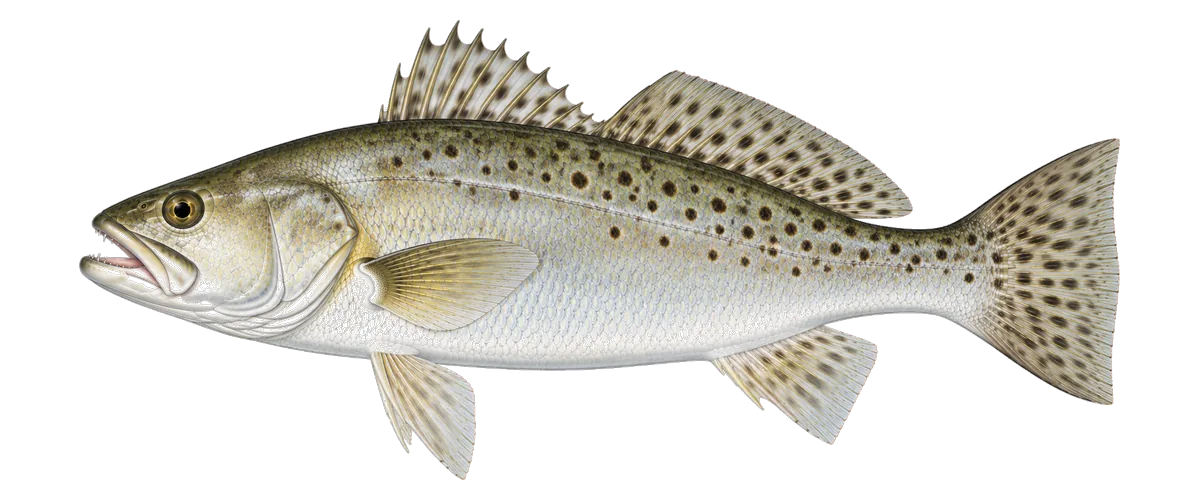
The best topwater for speckled trout is a walk-the-dog plug, like a Heddon Super Spook Jr., a MirrOlure She Dog or a Rapala Skitter Walk, worked in a steady side-to-side zigzag over shallow grass, oyster reefs and shorelines near deeper water. Throw it at first light, at dusk and on overcast days with a light breeze. Bone, white and chrome are the colors to start with. When a trout blows up on it and misses, let the plug sit still for a few seconds before you move it again.
Below: why trout hit topwaters, the lures that work, when and where to throw them, how to walk the dog, what to do about missed strikes, colors and hooks, and the rules for the big trout a topwater catches.
Do speckled trout hit topwater?
Yes, and the bigger ones especially. Texas Parks and Wildlife notes that floating lures are popular with anglers casting to large trout in shallow water in the warm months. Trout over about 20 inches eat mostly fish, and a walking plug looks like one in trouble.
Sport Fishing's David A. Brown calls the topwater the most exciting lure there is for trout. Walking plugs mimic finger mullet, needlefish and weak, disoriented baitfish, and a trout that locks onto one hits it with a ferocity that's hard to describe.
That aggression is also why topwaters miss so many fish. A trout charging a plug on the surface often misjudges it, so expect blowups that don't connect. There's a section on that below.
The best topwater lures for speckled trout
Most trout topwaters are walkers: a cigar-shaped plug that glides side to side when you twitch the rod. The ones trout anglers reach for:
- Heddon Super Spook Jr. The standard small walker, and one of the plugs Salt Water Sportsman's veteran Texas wader carries. Salt Strong's Luke Simonds prefers the Jr. for mixed bags of trout and redfish, and the full-size Super Spook when he's only after big snook in the fall.
- MirrOlure Top Dog and She Dog families. Brown lists the 4¾-inch Top Dog, 4-inch Top Dog Jr. and 3½-inch Top Pup, all with low-pitched, thunking rattles, and the 4-inch She Dog and 3½-inch She Pup with high-pitched ones.
- Yo-Zuri 3D Inshore Topknock Pencil. It sits flat on the water rather than tail-down, which makes it easy to walk. Brown calls it a trout slayer. It comes in 4- and 5-inch sizes and 36 colors.
- Rapala Skitter Walk. A smaller 3⅛-inch walker in 26 colors, for when the bait is small.
- D.O.A. PT-7. A 3-inch hollow soft-plastic topwater with a single weedless hook, for grass too thick for a plug with trebles.
Walker or popper? Walkers cover the most water and suit calm to lightly rippled water. A popper, with its cupped face, throws more water and noise in place, which helps it get noticed in a chop or stained water. Most trout anglers carry a walker or two and maybe one popper.
Rattles. A low-pitched, thunking rattle and a high-pitched one sound different under water, and on a given day trout can prefer one. In cooler fall water, Galveston Bay guide James Plaag finds slower, thumping topwaters work better.
When to throw a topwater for speckled trout
Low light. Louisiana angler Andre Thomas throws topwaters in low light and finds the bite dwindles once the sun's high. His ideal day is overcast with a light breeze of about 5 mph. First light and the last hour before dark are the classic windows.
Warm water. Topwaters work best from spring through fall, when trout are up shallow and active. Texas Parks and Wildlife ties floating lures to the warm months. In Louisiana's Big Lake, Capt. Nick Poe finds May one of the best topwater months, with trout right in the middle of the spawn.
Fall. As the water cools, trout feed hard before winter. In the Carolinas, guide Kyle Hughes keeps a topwater rigged for cloudy, overcast fall days, when trout turn aggressive. For the fall pattern, see where speckled trout go in the fall.
When to put it away. On bright, flat-calm midday water, in muddy water, and in cold water, a topwater catches few trout. Thomas switches to a twitchbait when the sun's high or fish won't commit to the surface.
Every topwater trout is a clue to the next: what time it bit, which tide, what the sky was doing. Taklbox saves each catch with its place, bait, tide, moon and barometer reading, so the pattern shows over a season.
Where to throw a topwater for trout
- Shallow grass flats, especially around sandy potholes, where trout hide in the grass and ambush bait crossing the sand.
- Oyster reefs. Thomas works oyster reefs and grass flats with topwaters, checking reef after reef until he finds fish.
- Shorelines near deep water. On a high tide, trout feed along the shoreline, and a plug walked parallel to the bank covers the strike zone.
- The surf. On calm mornings, Louisiana surf angler Sammy Romano throws topwaters for big trout in the troughs off the beaches and islands, since the plug has the profile of a larger baitfish.
- Under birds. In Texas, guide Randall Groves finds a topwater thrown to a school feeding under birds picks the bigger trout out of it.
Oyster reefs and grass edges are easier to find on a map than from the water. Taklbox Pro marks mapped oyster beds, the structure trout feed around.
How to walk the dog for speckled trout
Walking the dog makes a plug zigzag across the surface like a fleeing baitfish. Salt Water Sportsman's veteran Texas wader puts it this way: walking the dog takes practice, patience and pragmatism.
- Cast long, past where you think the fish are.
- Point the rod tip down, toward the water.
- Twitch the rod tip down with slack in the line. Each short, sharp twitch pulls the nose one way; the slack lets it glide back the other way.
- Reel in only the slack between twitches, and keep a steady rhythm: twitch, twitch, twitch.
- Change the pace. Try it fast and steady, then slower with pauses, until the trout show you what they want.
Tackle that helps:
- A loop knot. A knot that leaves the plug free to swing walks it better than one cinched tight to the eye. Simonds recommends the non-slip loop knot for the Super Spook Jr.
- A longer rod. Thomas fishes topwaters on a 7½-foot rod, which picks up slack faster when a trout hits right after the plug lands.
- Braid with a short leader. Braid casts far and doesn't stretch, which makes the twitches crisp. Add a few feet of fluorocarbon or mono leader for the trout's teeth and the shell.
What to do when trout miss your topwater
Trout blow up on topwaters and miss all the time. How you react decides whether you catch them.
Don't set the hook on the splash. Wait until you feel the fish's weight, then sweep the rod. Snatching the plug away on the blowup pulls it out of the fish's reach.
Let it sit. Brown's advice after a miss: if your nerves can take it, let the topwater sit perfectly still for five to ten seconds, then twitch it a couple of times. Big trout often stalk wounded prey, and that small movement triggers the follow-up strike.
Read the miss. Poe reads a trout that hits two or three feet behind the plug as one that isn't committed. When he's getting blowups without hookups, he knows the fish are there and changes lures rather than the retrieve:
- A suspending twitchbait like a MirrOdine in clear water, or a soft-bodied one like a Corky in stained water.
- A soft plastic on a 1/8-ounce jighead, if the fish are really finicky.
- Move on if neither works, and come back another day.
For the rest of the trout lure box, see the best bait for speckled trout.
Best topwater colors for speckled trout
Color matters less than timing and retrieve, but a few rules hold:
- Bone and white are where most trout anglers start. Simonds says white works everywhere, and calls bone tough to beat for the redfish that share the same flats.
- Chrome and natural baitfish patterns in clear water and bright light, where they flash like a mullet.
- Dark colors in low light. A black or dark plug shows a sharper silhouette against the sky at dawn, dusk and under heavy cloud.
- Bright or chartreuse in stained water, where it helps the fish find the plug.
Size. Match the bait. A 3- to 3½-inch plug when the bait is small or the trout are finicky; a 4- to 5-inch walker when the mullet are bigger and you're after the biggest trout. Poe's rule: you'll always catch bigger fish on a bigger bait.
Hooks and handling
Most walking plugs come with two or three treble hooks, which hook a lunging trout well but are hard on fish you release, and on your hands. Simonds swaps the trebles on his Super Spook Jr. for single hooks. Many trout anglers do the same, or flatten the barbs, especially where many fish go back.
A big topwater trout is often a big female, and many states protect those fish with a slot. Wet your hands, keep the fish in the water while you unhook it, and if it's going back, send it back quickly. Trout have thin, soft mouths, so use a net rather than lifting a big one by the line.
Speckled trout rules for big fish
Topwaters catch bigger trout than most baits, and the biggest trout are the ones most often protected. Many states use a slot, sometimes with room for one fish over it, and Florida sets its rules by region. The cards below come from the data Taklbox checks your catch against, with each state's official link. For every state on file, see speckled trout size limits by state.
A trophy you release still makes the log. On iPhone Pro models, Taklbox measures the trout's length from your photo and estimates its weight, so you have the numbers before it swims off.
Frequently asked questions
Do speckled trout hit topwater?
Yes, and topwaters catch some of the biggest trout of the year. They hit best in low light over shallow grass, oyster reefs and shorelines, from spring through fall.
What is the best color topwater for speckled trout?
Start with bone or white. Use chrome or a natural baitfish pattern in clear water and bright light, a dark plug at dawn and dusk, and something bright in stained water.
What size topwater for speckled trout?
A 3- to 3½-inch plug when the bait is small or the fish are picky, and a 4- to 5-inch walker for bigger trout. Match the size of the mullet or baitfish you see.
What is the best time to throw topwater for trout?
First light, the last hour before dark, and overcast days with a light breeze. The bite usually fades once the sun is high on calm water.
What do you do when a trout misses your topwater?
Stop the plug and let it sit for five to ten seconds, then twitch it. If trout keep missing, switch to a suspending twitchbait or a soft plastic on a light jighead. For more ways to catch them, see how to catch speckled trout.