Delayed harvest is a trout rule for heavily stocked streams. From fall into spring, every trout you catch goes back, and you can fish only with artificial lures, no bait. Then, in late spring or summer, the stream opens to harvest under looser rules, so anglers can keep trout that likely wouldn't survive the summer's warm water anyway. The catch-and-release season is on now in all six states below.
Below: what delayed harvest means, the dates and lure rules in North Carolina, Georgia, Tennessee, Virginia, Pennsylvania and West Virginia, which streams carry it, the license you need, how to fish it, and how to release fish well.
What does delayed harvest mean?
The harvest is delayed, not cancelled. The state stocks the stream with lots of catchable trout from fall through spring and makes it catch-and-release through the cool months, when trout do well there. Every stocked fish can be caught many times instead of once, which is why delayed harvest water fishes so well through the winter.
Virginia's Department of Wildlife Resources (DWR), which started its program in 1989, describes the idea plainly: the streams are generally large with good trout habitat, but summer water temperatures often limit how long trout survive. So the trout are released all winter and spring, then anglers can keep them once the water warms.
Three things are true almost everywhere:
- No trout kept during the catch-and-release season. Most states also bar having any trout with you on the stretch.
- Artificial lures only, and no bait on you while you fish.
- Only the designated section counts. North Carolina marks its delayed harvest water with diamond-shaped black-and-white signs. The same creek above or below the section can follow different rules.
Delayed harvest dates and rules by state
| State | Catch-and-release season | Lures | After the season |
|---|---|---|---|
| North Carolina | Oct. 1 to the Friday before the first Saturday in June | Artificial, one single hook, no bait on you | Youth-only morning, then harvest through Sept. 30 |
| Georgia | Nov. 1 to May 14 | Artificial, one single hook per lure, droppers allowed | Regular trout rules May 15 to Oct. 31 |
| Tennessee | Most streams Oct. 1 to Feb. 28 | Artificial only, no bait | Regular trout rules |
| Virginia | Oct. 1 to May 31 | Artificial only, no bait on you | Regular stocked-water rules June 1 to Sept. 30 |
| Pennsylvania | Day after Labor Day to June 14 | Artificial lures and flies only, all year | Its own harvest rules June 15 to Labor Day |
| West Virginia | Nov. 1 to May 15 | Artificial flies and lures, no scented baits | Regular trout rules May 16 to Oct. 31 |
The rest of this post goes state by state.
Delayed harvest trout in North Carolina
North Carolina's program, run by the N.C. Wildlife Resources Commission (NCWRC), covers 30 stream sections and two lakes.
The rules, from NCWRC's trout page:
- October 1 until a half hour after sunset on the Friday before the first Saturday in June: no trout may be kept or possessed, only artificial lures with one single hook are allowed, and you can't have natural bait on you while fishing. This season, that's through Friday, June 4, 2027.
- That Friday night until 6 a.m. Saturday: no fishing at all.
- 6 a.m. to noon on the first Saturday in June: youth only. Since the 2025-26 rules, that means anglers under 16, down from under 18.
- From noon that Saturday through September 30: open to everyone, with no bait or gear restrictions, under the summer harvest rules on NCWRC's trout page.
NCWRC defines an artificial lure as one that "neither contains nor has been treated with any substance that attracts fish by the sense of taste or smell," so scented soft plastics don't qualify.
Where: NCWRC's November 2026 stocking schedule lists these waters, by county:
- Ashe: Helton Creek, Big Horse Creek, South Fork New River, Trout Lake
- Burke: Jacob Fork
- Caldwell: Wilson Creek
- Clay: Fires Creek
- Graham: Big Snowbird Creek
- Haywood: West Fork Pigeon River
- Henderson: North Fork Mills River
- Jackson and Swain: Tuckasegee River
- Macon: Nantahala River
- Madison: Big Laurel Creek, Shelton Laurel Creek, Spring Creek
- McDowell: Curtis Creek, Mill Creek, Catawba River
- Mitchell: Cane Creek, North Toe River
- Polk: Green River
- Surry: Ararat River, Mitchell River
- Transylvania: East Fork French Broad River, Little River
- Watauga: Watauga River, Lake Coffey
- Wilkes: East Prong Roaring River, Stone Mountain Creek, Reddies River, Elk Creek
NCWRC posts a delayed harvest stocking schedule each month, and its trout page has maps of every section. Expect fewer fish than usual for a while: the Bobby N. Setzer hatchery, which produces over 75% of the state's stocked trout, is being renovated, and NCWRC expects reduced stockings in 2026, 2027 and possibly 2028. After Hurricane Helene, some stocking spots also moved.
Delayed harvest trout in Georgia
Georgia's Wildlife Resources Division runs five delayed harvest streams. From November 1 through May 14, you have to release every trout right away and use and carry only artificial lures with one single hook per lure. Droppers are fine, as long as each lure has a single hook.
- Amicalola Creek, from Steele Bridge Road (County Road 192) down to GA 53.
- Chattahoochee River, from Sope Creek, off Columns Drive, down to U.S. 41 (Cobb Parkway), in metro Atlanta.
- Chattooga River, from the GA 28 bridge upstream to the mouth of Reed Creek.
- Smith Creek in Unicoi State Park, from Unicoi Dam down to the park boundary.
- Toccoa River on Forest Service land, from 0.4 miles above Shallowford Bridge up to 450 feet above the Sandy Bottom canoe access.
From May 15 through October 31, these streams follow Georgia's regular trout rules. Georgia's Go Fish Georgia site has maps of each section.
Delayed harvest trout in Tennessee
The Tennessee Wildlife Resources Agency (TWRA) bans keeping or possessing trout on these waters during the catch-and-release season. Only artificial lures are allowed, and you can't use or carry bait.
| Water | Catch-and-release season |
|---|---|
| Hiwassee River, Apalachia Powerhouse down to the L&N Railroad Bridge | Oct. 1 to Feb. 28 |
| Tellico River, mouth of the North River up to the North Carolina line | Oct. 1 to Feb. 28 |
| Paint Creek, Paint Creek Campground down to the French Broad River | Oct. 1 to Feb. 28 |
| Doe River, within Roan Mountain State Park | Oct. 1 to Feb. 28 |
| Big Soddy Creek, upstream of Back Valley Road | Nov. 1 to Feb. 28 |
| Buffalo Creek, mill dam down to the Buffalo Springs WMA boundary | Oct. 1 to Jan. 31 |
| Acorn Lake, Montgomery Bell State Park | Dec. 1 to March 31 |
What changed for 2026: Big Soddy Creek's season now starts November 1, a month later than before, and the Piney River is no longer a delayed harvest water.
The Tellico's $6 Tellico-Citico permit isn't needed during this season. It applies from March 1 through August 15. For Tennessee's trout license, see do you need a fishing license in Tennessee.
Delayed harvest trout in Virginia
From October 1 through May 31, Virginia's delayed harvest waters allow only artificial lures, catch-and-release only, with no trout and no bait in your possession. From June 1 through September 30, they're like any other designated stocked trout water. DWR stocks them, typically, once each in fall, winter and spring.
DWR's list:
- Accotink Creek (Fairfax County), King Arthur Road down to Braddock Road.
- Back Creek (Bath County), below the Back Creek Dam. Walk around the private service road bridge at the lower end. Crossing it is prohibited.
- Big Moccasin Creek (Scott County), below Gate City.
- Chestnut Creek (Carroll County), along the New River Trail State Park near Galax.
- Hardy Creek (Lee County).
- Holliday Creek (Appomattox and Buckingham counties), in the Appomattox-Buckingham State Forest. Anglers 16 and older also need a State Forest Use Permit.
- Holmes Run (Fairfax County), below the Lake Barcroft Dam.
- Indian Creek (Lee County), in Wilderness Road State Park.
- Middle Fork of the Powell River (Wise County), between Appalachia and Big Stone Gap.
- North Fork of Pound and Pound rivers (Wise County), below North Fork of Pound Dam.
- North River (Augusta County), below Elkhorn Dam, reached only by trail.
- Passage Creek (Warren County), through the Front Royal Fish Hatchery.
- Pedlar River (Amherst County). Too low to stock in the fall, so it's stocked from February 1 through May 31.
- Piney River (Nelson and Amherst counties).
- Roanoke River, two sections: Green Hill Park in Roanoke County, and along Riverside Drive in Salem.
Delayed harvest trout in Pennsylvania
Pennsylvania calls it Delayed Harvest Artificial Lures Only (DHALO). The Pennsylvania Fish and Boat Commission keeps these waters open all year, 24 hours a day, and the lure rule never lifts: only artificial lures of metal, plastic, rubber or wood, or flies and streamers, on spinning or fly gear. No bait, fish eggs, bait paste or other edible substance, at any time.
From the day after Labor Day until June 15, no trout may be kept. From June 15 through Labor Day, DHALO waters allow harvest under their own size and creel limits, which differ from Pennsylvania's statewide trout rule. They're in the PFBC's trout regulations.
DHALO sections are listed by region in Pennsylvania's regulations. A few well-known ones: Tulpehocken Creek below Blue Marsh Dam, Oil Creek in Oil Creek State Park, Pine Creek in Tioga County, Loyalsock Creek and Little Pine Creek in Lycoming County, and Kinzua Creek in McKean County.
Keystone Select waters, almost all of them DHALO sections, get larger trout, two to three years old, in the spring stockings. The PFBC scheduled 16 of them for its October 2026 stocking.
Delayed harvest trout in West Virginia
The West Virginia Division of Natural Resources (WVDNR) applies its catch-and-release rules to five delayed harvest streams from November 1 through May 15. General trout rules apply from May 16 through October 31.
- Clear Fork of the Guyandotte River (Wyoming County), a 1-mile section below the R.D. Bailey WMA manager's residence.
- Middle Wheeling Creek (Ohio County), above Middle Wheeling Creek Lake.
- Paint Creek (Fayette and Kanawha counties), 12.5 miles from Ash Branch up to the mouth of Milburn Creek.
- Shavers Fork (Randolph County), 5.5 miles from Whitmeadow Run down to McGee Run.
- Williams River (Pocahontas County), a signed 2-mile stretch starting about 2 miles below Tea Creek.
During the catch-and-release season:
- fishing is allowed in daylight hours only,
- only artificial flies and lures are allowed, with no scent added, and WVDNR names Powerbait and Gulp as illegal,
- lures with more than one hook need barbless hooks, while single-hook lures can be barbed,
- every trout goes back at once, and none can be in your possession.
What license do you need for delayed harvest water?
Delayed harvest water is trout water, so most states want a trout license or stamp on top of the fishing license, even though you can't keep anything:
- North Carolina: the inland fishing license, which covers public mountain trout waters. See the Carolinas license guide.
- Georgia: a fishing license plus a trout license. See Georgia's license guide.
- Tennessee: a license with trout privileges. See Tennessee's license guide.
- Virginia: a freshwater license plus a trout license, required on stocked trout water from October 1 through June 15. See Virginia's license guide.
- Pennsylvania: a fishing license plus a trout permit.
- West Virginia: a fishing license plus a trout stamp, which West Virginia requires even for catch and release. See West Virginia's license guide.
How to fish delayed harvest water
Delayed harvest trout are mostly stocked fish, and the fishing changes with the calendar.
- Fall, after the first stockings: fresh trout are usually bunched up and eager. Small inline spinners, small spoons and marabou jigs work, and so do woolly buggers and bright nymphs on a fly rod.
- Winter: trout slow down in cold water and hold in the deeper, slower pools. Fish slower and closer to the bottom, and try the warmest part of the day.
- Spring: insects start hatching, and fly anglers do well with nymphs and small dry flies as the water warms.
Check your hooks against the state. North Carolina and Georgia require one single hook per lure, so swap the treble on a spinner for a single hook before you go. West Virginia lets you keep a treble if it's barbless. Pennsylvania, Tennessee and Virginia require artificial lures but don't limit the hooks.
Leave the scented baits at home. Gulp and other scented baits are banned in West Virginia and don't meet North Carolina's definition of an artificial lure. In all six states, just having bait on you on a delayed harvest stretch is a violation.
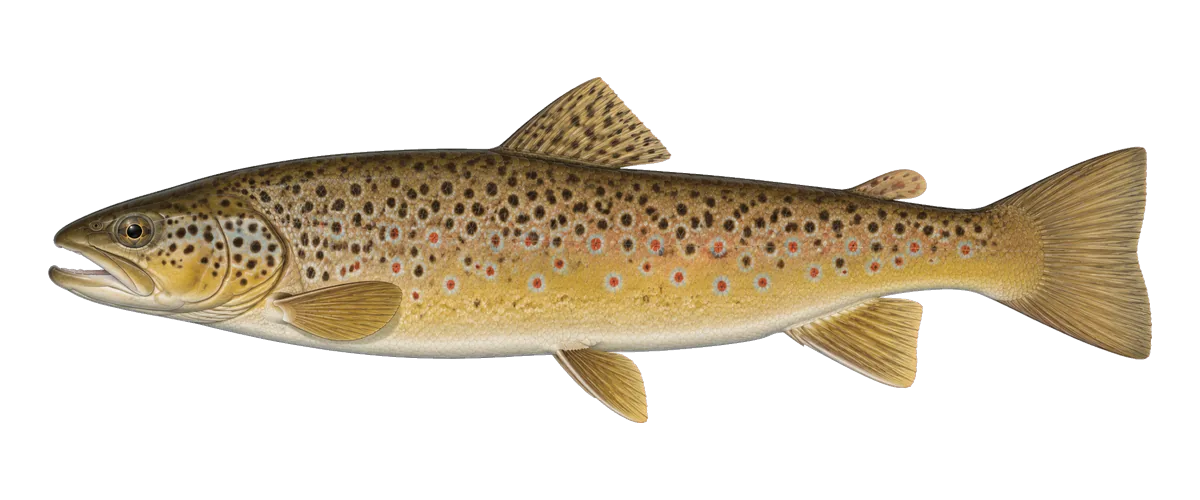
Not sure whether you landed a stocked rainbow, a brown or a wild brook trout? Snap it before you let it go and Taklbox names it on the phone itself, with no signal needed.
How to release trout on delayed harvest water
Every fish is meant to be caught again, so handling matters. NCWRC's trout handling advice comes down to four steps:
- Plan ahead. Bring pliers or a release tool.
- Land it quickly. Use tackle heavy enough that you don't play the fish to exhaustion.
- Keep it wet. Leave the fish in the water while you unhook it and take its picture.
- Let it go when it's ready. Hold it until it swims off on its own power.
If you have to handle a trout, wet your hands or use a rubberized, knotless net, support the fish level, and cut the line if it's hooked deep.
One quick photo is all you need. On iPhone Pro models, Taklbox measures the fish from that photo, so the trout goes back without a trip across a tape. For doing it by hand, see how to measure a fish.
Keeping trout after the delayed harvest season
When the catch-and-release season ends, Georgia, Tennessee, Virginia and West Virginia fall back to their regular trout rules. These cards are the statewide rules Taklbox has on file. Some streams, like Tennessee's Hiwassee, carry extra limits of their own, so check the agency's list for the water you're on.
Georgia:
Tennessee. The Hiwassee adds a brown trout limit of its own:
Virginia:
West Virginia:
North Carolina's summer harvest rules for delayed harvest water are on NCWRC's trout page, and Pennsylvania's DHALO harvest rules are in the PFBC's regulations, linked above. Neither is on file in Taklbox yet.
Frequently asked questions
When does delayed harvest start in NC?
On October 1. The catch-and-release season runs until a half hour after sunset on the Friday before the first Saturday in June, then the first Saturday morning is for anglers under 16, and harvest opens to everyone at noon.
Can you keep fish on delayed harvest streams?
Not during the catch-and-release season, which runs from fall into spring. Once it ends, each state's harvest rules take over, and the dates are in the table above.
Can you use PowerBait on delayed harvest water?
No. PowerBait is a prepared bait, not an artificial lure, so it's out on every delayed harvest stretch. West Virginia bans PowerBait and Gulp by name, and scented soft plastics fail North Carolina's definition of an artificial lure.
Do you need a trout stamp for delayed harvest?
In most states, yes. Georgia, Tennessee, Virginia, Pennsylvania and West Virginia require trout privileges on top of the fishing license, even for catch and release. North Carolina's inland fishing license covers its mountain trout water.
Are delayed harvest streams stocked in the winter?
Yes. States stock them from fall through spring. Virginia typically stocks each one in fall, winter and spring, and North Carolina posts a monthly delayed harvest stocking schedule.