A popping cork rig is a float with a wire through it and noisy beads or a cupped face, a leader long enough to hang the bait just above the bottom or the grass, and a live shrimp or soft plastic on a small hook or jighead. Cast it over 2 to 6 feet of water, pop it sharply two or three times, and pause. The noise sounds like fish feeding, redfish and speckled trout come to look, and they eat the bait as it falls back under the cork.
Below: the kinds of popping cork, how to set one up step by step, how long the leader should be, live shrimp versus soft plastics, how to work it, and how to fish it for redfish and for trout.
What is a popping cork?
A popping cork is a float built to make noise. Pull it sharply with the rod tip and it chugs, splashes and clacks. Fish hear it from a distance, swim over to see what's feeding, and find your bait hanging there.
Sport Fishing magazine's Sam Hudson describes the common kinds:
- Traditional popping corks: a foam body on a wire, with beads that clack against the foam. Egg, cigar and cone shapes are all common. A cork with a cupped face throws more water when it's popped.
- Weighted corks: a cigar or football shape with weight built in, for distance. Cajun Thunder is the best-known name. Capt. Jeff Poe of Lake Charles fishes a football-shaped cork with beads at each end.
- Clacker corks: a slip sinker under the float does the clacking instead of beads, and the popper version is louder and splashes more.
Shape changes the sound. Florida guide Capt. William Toney finds an oval cork gives a sharper pop than a round one. Carolina Sportsman's Phillip Gentry points out the downside of a stemmed cork: the wire can bend and stop working, and line can wrap the stem.
Popping cork rig setup, step by step
- Tie your main line to the top of the cork. Braid casts farther and pops the cork sharper than mono.
- Tie a leader to the bottom swivel. Toney uses a stiff 20-pound monofilament or fluorocarbon, which keeps the leader from wrapping the wire. Hudson suggests 15- to 20-pound fluorocarbon in clear water and 20 to 50 pounds in dark water. Charleston guide Capt. Richard Stoughton has gone to 80-pound around docks.
- Add the bait end: a 1/8-ounce jighead with a soft plastic, or a small hook with a live shrimp.
- Optional: an egg sinker below the cork. Stoughton threads one on the leader twice so it stays put, far enough above the bait not to spoil its action.
If braid tangles at the top swivel, St. Petersburg guide Capt. Ray Markham ties in a short piece of stiff 30-pound fluorocarbon between the braid and the cork.
How long should the leader be under a popping cork?
Long enough to hang the bait just above the bottom or the top of the grass, and no longer. Toney's guide:
| Water depth | Leader length |
|---|---|
| Under 3 feet | 12 to 15 inches |
| 3 to 5 feet | 18 to 24 inches |
| Over 6 feet | 30 to 36 inches |
He goes longer in clear water with spooky fish, and shorter in stained or choppy water. Markham finds a leader longer than about 6 feet hard to cast on a 7- to 7½-foot rod. Stoughton runs longer leaders in spring and shorter ones in fall, following how deep the fish are.
Shallow grass flats are where a popping cork shines. Reading the bottom before you go helps you find the depth to set it to. Taklbox Pro shades charted depth on the map.
Popping cork rig with live shrimp
Live shrimp under a cork is the classic, and Texas Parks and Wildlife calls the popping cork the most popular rig for speckled trout. Hook the shrimp under the horn on its head, in front of the dark spot, so it stays lively and kicks under the cork.
The hook has to hold. Gentry's rule: use a hook that keeps the shrimp on after two or three pops instead of ripping it free. A J-hook, a Kahle hook, a circle hook or a light jighead all work. With a circle hook, reel when the cork goes down instead of setting the hook.
Toney also hangs pilchards and finger mullet under a cork, on a small jighead or hook. A dead or sluggish shrimp doesn't work as well; change it out.
Popping cork rig with soft plastics
A soft plastic under a cork lasts all day and never dies. Hudson's guides fish soft plastics from D.O.A., Berkley Gulp!, Z-Man and others under their corks, and he uses a jig and soft plastic under a cork for bull redfish.
Toney's choices are a 3-inch shrimp imitation, a small shad tail or a MirrOlure Lil John, on a 1/8-ounce red jighead. Texas Parks and Wildlife notes that worm jigs under a small popping cork work well for trout on grassy flats.
Color. Toney matches it to the water: natural colors like root beer, watermelon and white in clear water, chartreuse or glow in stained water, and plum or black in low light.
How to work a popping cork
Toney's cadence, for a drifting boat over the flats:
- Cast 30 to 50 feet ahead of the drift and let the cork settle for 2 or 3 seconds.
- Pop it sharply two or three times with the rod tip.
- Pause 3 to 5 seconds.
- Repeat until it's back to the boat.
Most strikes come on the pause, as the bait falls back under the cork. When the cork goes under or swims off, reel down and come tight.
Stoughton prefers a double pop: two quick snaps, so the bait jumps twice, then falls. Markham uses a quieter cork, popped less, when fish are skittish, where there's more boat traffic.
Popping cork rig for redfish
Redfish come to the noise in murky or choppy water where they can't see far. Hudson's best spots: creek edges that lead to a drop-off, and docks, in 2 to 6 feet of water. Poe averages about 6 feet in Louisiana's Calcasieu Lake.
A Louisiana trick: Capt. Ted DeAgano of Delacroix hangs a 1/2- or 3/4-ounce weedless gold spoon about 8 inches under a popping cork on 40-pound mono. The cork calls the fish in and the spoon is right there flashing. For more redfish baits under a cork, see the best bait for redfish.
Every red you catch on a cork is a note about where they feed on which tide. Taklbox saves each catch with its place, bait, tide, moon and barometer reading.
Popping cork rig for speckled trout
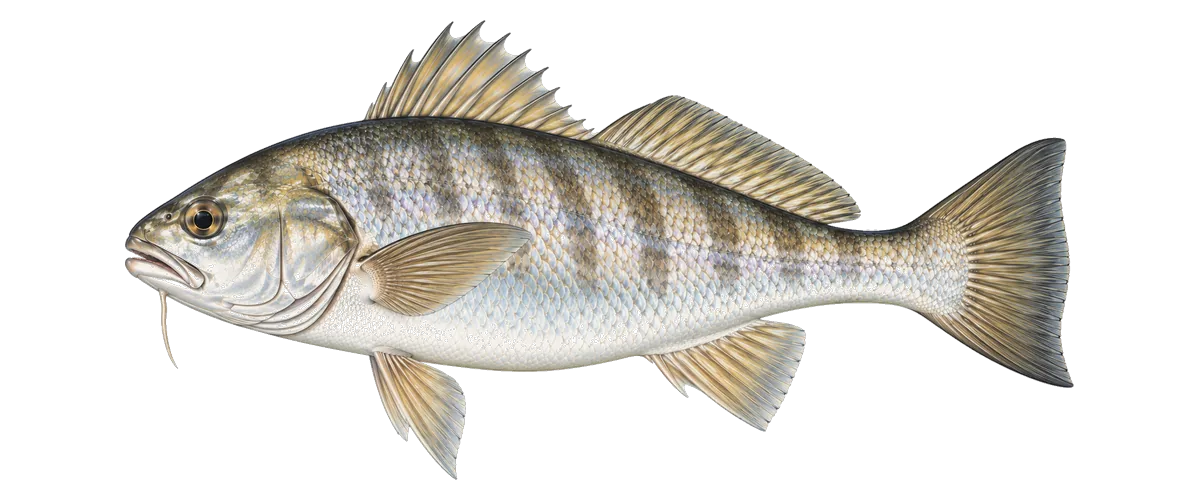
Speckled trout on the grass flats are what the popping cork was made for. Toney fishes it over grass flats and sand with scattered structure in 3 to 5 feet of water, best on rainy, overcast and windy days, and at dawn and dusk.
Trout sit a little higher in the water than reds, so set the leader so the bait hangs just over the grass. Their mouths tear easily, so keep the drag light and don't horse them. In November, Matagorda guide Capt. Glenn Ging hangs a Vudu Shrimp or a small Bass Assassin plastic under a popping cork for trout feeding along the shell reefs and bay shorelines. For more on fall trout and the best baits for them, see where speckled trout go in the fall and the best bait for speckled trout.
When a popping cork doesn't work
- Strong current. Poe skips the cork when the current is ripping, because redfish hold tight to the bottom and the bait rides over them. Free-line or bottom-fish instead.
- Deep water. Most guides fish a cork in 2 to 6 feet. Deeper, a free-lined bait or a jig reaches fish better. Florida Sportsman's dock-light trout anglers skip the cork altogether and free-line live shrimp.
- Big schools of other fish. Poe avoids casting near big schools of other fish, which will attack the cork itself.
Redfish and trout rules
A popping cork catches a lot of fish that have to go back. Every state that has redfish and speckled trout manages them with size limits, and most with slots. Here are Florida's, straight from the data Taklbox checks your catch against, with the official link.
Frequently asked questions
How long should the leader be on a popping cork?
Long enough to hang the bait just above the bottom or the grass. Capt. William Toney uses 12 to 15 inches in water under 3 feet, 18 to 24 inches in 3 to 5 feet, and 30 to 36 inches over 6 feet.
What hook should I use under a popping cork?
One that holds the bait after a few pops. A 1/8-ounce jighead for soft plastics. For live shrimp, a small J-hook, Kahle hook or circle hook. With a circle hook, reel instead of setting the hook.
Can you use braid with a popping cork?
Yes, and most guides do. Tie the braid to the top of the cork and a stiff mono or fluorocarbon leader to the bottom. If the braid tangles on the cork's wire, add a short piece of stiff 30-pound fluorocarbon above the cork.
How deep can you fish a popping cork?
It's at its best in about 2 to 6 feet of water. Sport Fishing magazine reports fish caught under one in about 35 feet of water around a Gulf oil platform, but deep water is usually better fished with a jig or a free-lined bait.
Do you need to pop a popping cork?
Yes; the noise is what draws fish in. Pop it two or three times, then pause. Most strikes come on the pause, so don't pop it nonstop.