The best bait for pompano is a live sand flea, the little mole crab that digs into the wet sand at the edge of the surf. Fish it on a double-drop rig in the trough behind the first sandbar. When sand fleas are scarce, fresh shrimp, clams or a Fishbites strip work too. For lures, hop a small pompano jig, like a Doc's Goofy Jig in pink, yellow or chartreuse, along the bottom, and expect the strike as it falls. Pompano follow water of about 70 to 75 degrees, which puts them on Florida's northern beaches in spring and fall and in central and south Florida in winter.
Below: what pompano eat, the best live and natural baits, how to tie the pompano rig, where to cast, the jigs and lures that work, fishing from piers and boats, when to go, and the rules.
What pompano eat
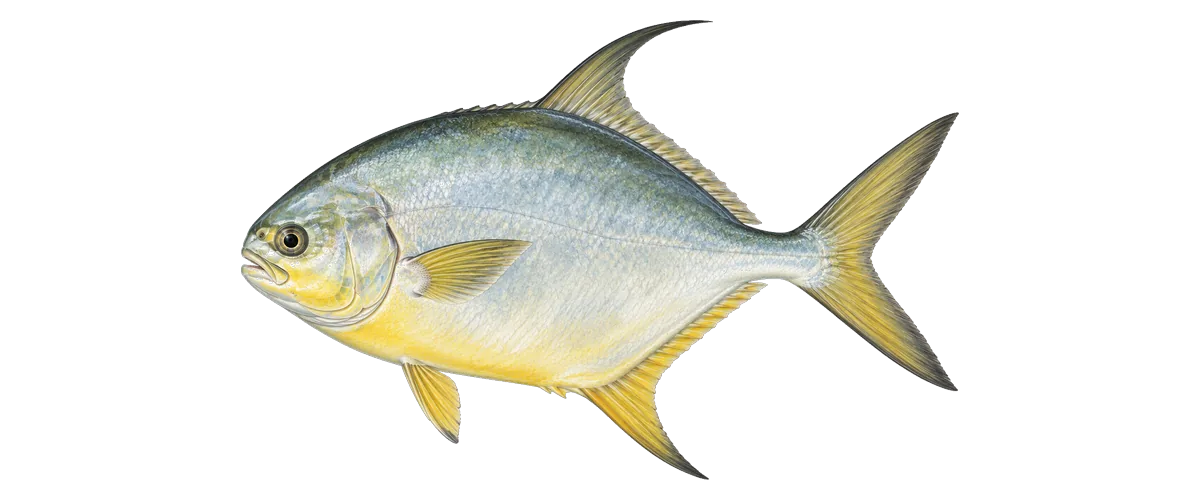
Pompano are jacks built for the surf: deep, flat and fast. Florida Sportsman's Frank Sargeant lists their food as sand fleas, coquina clams, small crabs and shrimp, the crustaceans that get churned out of the sand in the wash. Salt Water Sportsman's Dave Lear notes they feed by sight, and will grab a small minnow-like bait that crosses their path, especially when a school is competing for food.
That's why the best pompano baits are small, crustacean-sized and fished right on the bottom where waves are uncovering food.
The best live bait for pompano: sand fleas
Sargeant calls the sand flea the universal pompano bait, and live ones are the top choice.
- Where to find them. Sand fleas live in the wet sand where waves wash up and back. Watch for the little V-shaped ripples they leave as the water runs off the beach, and scoop there.
- How to catch them. Use a sand flea rake, a wire-mesh scoop on a handle, or a dip net in the backwash. Tackle shops on the Gulf and Atlantic beaches sell rakes, and some sell sand fleas.
- Which ones. Medium-sized fleas are easiest for a pompano to eat. Many anglers prize a female with the orange egg sac under her shell, and Lear notes that fly anglers even tie a bit of orange into their sand flea flies to copy it.
- Keep them alive in a bucket of damp sand in the shade, not in a bucket of water.
- Hook them from the bottom, through the shell near the tail, so the point comes out the top.
When the fleas run out, commercial pompano fishermen sometimes boil sand fleas; Sport Fishing's Steve Waters notes it turns them pink or orange and adds scent.
Other good pompano baits
- Fresh shrimp, peeled and cut into small pieces. Sargeant finds fresh-cut shrimp works well around pier pilings.
- Clams, including coquinas dug from the same beach.
- Fishbites and Fish Gum. Sargeant finds these synthetic strips can work as well as natural bait or better, and they stay on the hook longer, which helps in rough surf.
How to tie a pompano rig
The double-drop rig, often just called a pompano rig, holds two baits a little off the bottom, with a sinker below to anchor it in the surf. Florida Sportsman's Mike Conner ties it like this:
- Start with about 36 inches of mono or fluorocarbon, heavier than your main line, since it drags the bottom; he uses 20-pound rig line with 12-pound casting line.
- Tie two dropper loops, 3 to 4 inches long, along it.
- Add a 1/0 or 2/0 circle hook to each loop, and thread a small, brightly colored foam float on each loop above the hook to lift the bait and catch a fish's eye.
- Put a barrel swivel at the top and a snap at the bottom for the sinker.
Float color. South Florida commercial pompano fisherman Rich Vudilich told Conner he prefers white floats in clear, green water, and that anglers on the tannic-stained beaches of northeast Florida and Alabama swear by orange. Alabama guide Keith Powell puts a red or orange bead right above each hook, because it looks like a sand flea's egg sac.
Sinkers. Conner finds 3 ounces and a flat sinker can hold in calm surf, 4 ounces is about average, and 5 or 6 ounces may be needed in a groundswell. A pyramid sinker digs into the sand, and a Sputnik-style sinker, with wire arms, holds best in rough water.
Every pompano you land is a clue: which beach, which tide, which wind. Taklbox saves each catch with its place, bait, tide, moon and barometer reading, so you can find the pattern on your beaches.
Where to cast for pompano in the surf
Pompano feed in the wash, often closer to the beach than people cast.
- The first trough. The deeper water between the beach and the first sandbar is where waves knock sand fleas and coquinas loose. Many pompano are caught within a short cast.
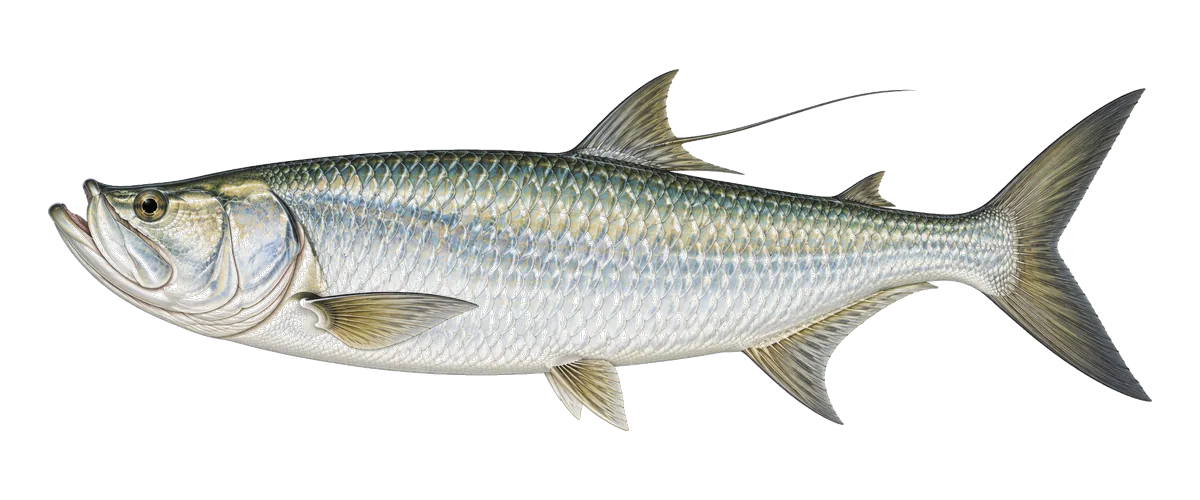
- Runouts. Sargeant looks for rips cutting through the nearshore bars; they draw pompano, redfish and Spanish mackerel, and one within casting range is worth fishing.
- Points and dark troughs. Powell looks for clear water and current, sand points jutting off the beach, and the darker troughs just off it.
- Quiet beaches. Pompano scatter when the surf is full of swimmers. Powell's advice: avoid heavily swum stretches.
- Farther out in summer. When the shallows warm into the 80s, Sargeant finds pompano move out to the third or fourth bar, sometimes in 15 to 20 feet of water, out of casting range from the beach.
Onshore winds stir up sand fleas and shrimp and can turn the fish on; offshore winds flatten the surf and can make them wary in clear water.
The best lures for pompano
Pompano jigs
The pompano jig is the classic lure, and it imitates a sand flea scooting along the bottom.
- Banana-shaped jigs like Doc's Goofy Jig carry their weight along the shank, so they cast far and the hook rides up. Sargeant uses 3/4- to 1-ounce sizes from piers, and Powell throws a roughly 1-ounce jig from the beach.
- Nylon-skirted jigs like the Bomber Nylure, with chrome heads, are a favorite on bars and flats.
- Small bucktails, like the quarter-ounce bonefish jigs Lear recommends, fished the same way.
- On the flats, Florida Sportsman's David Brown keeps jigs at about 1/4 ounce or less, going heavier only for depth or current.
Colors. Pink, yellow, chartreuse and white. Brown finds yellow or yellow and white usually best, with pink better when visibility drops. Sebastian guide Capt. Glyn Austin fishes pink, orange or green Goofy Jigs with a contrasting teaser, and says pompano jump on anything brightly colored.
How to fish a pompano jig. Let it hit bottom, then hop it a foot or two with short twitches so it kicks up little puffs of sand, and follow it back down with the rod tip. Most strikes come as the jig falls, and it can be just a tick or a pause in the line, so set the hook at anything odd. In the surf, Brown casts parallel to the beach as a wave slides in, then lets the backwash tumble the jig out like a sand flea.
Tip it. Sargeant adds a half-inch strip of shrimp tail, or a small teaser fly at the jig's eye.
Other lures
- Soft plastics: a Gulp! Sand Flea on a small jighead, a D.O.A. Shrimp, or a 3- to 4-inch shad tail, all from Lear's list. Austin uses a MirrOlure Lil John on a light jighead on the flats.
- Small spoons, worked fast. Sargeant finds speed draws the strikes.
How to catch pompano from a pier
A pier puts you over the outer bars and troughs, where pompano travel just past casting range from the beach. Sargeant's pier tactics:
- Fish the middle of the pier, over the bars and troughs, not the far end, which is better for kingfish, cobia and tarpon.
- Try the bar top and the deeper cut; some days the fish favor one, some days the other. Pompano also hold close to the pilings.
- A double-drop rig sits more naturally from a pier than from the beach, because it's past the heavy wash. A 2- to 4-ounce sinker and a small circle hook do the job.
- Use 15-pound braid or heavier, so you can lift a fish without a pier net, and stouter gear in case a bull redfish takes the bait.
- Move if nothing bites in 20 minutes, and watch for silver flashes near the surface that give away a school.
He names Navarre Beach Pier, Jacksonville Beach Pier, Deerfield Beach Pier, Juno Beach Pier and the Sunshine Skyway North Pier among Florida's best for pompano. Powell recommends the Gulf State Park Pier in Alabama.
Taklbox Pro maps fishing piers and boat ramps, so you can find a pier near the beaches where the fish are running.
Pompano from a boat, inlets, bridges and flats
- Inlets and passes. Austin jigs the channel at Sebastian Inlet and finds the best bite usually as the tide changes, especially on the incoming. Brown works channel edges and jetties from deep to shallow until he finds the depth the fish want.
- Bridges. Winter pompano gather in current-swept channels and bars near coastal bridges, Brown notes, and also feed some way down-current of them.
- Flats. Look for broken bottom with sandy strips and troughs, oyster bars and rubble, rather than dense grass.
- Watch the wake. Running a boat over a flat often sends pompano skipping across the surface. Brown calls them "pie plates"; stop where you saw them and drift back through, slowing the drift with a drift sock.
When to fish for pompano
Pompano follow the temperature. Sargeant puts their comfort zone at about 65 to 80 degrees, with 70 to 75 the sweet spot, and Austin likes it above 70.
- Spring: schools move north from south Florida along both coasts, and by March or April pier anglers from Jacksonville to Pensacola are catching them.
- Summer: the fish move out to the outer bars, deeper water, bridges and passes.
- Fall: the best fishing is in the Panhandle and northeast Florida, and by mid-October, Sargeant finds the schools start moving south.
- Winter: pompano concentrate on central and south Florida beaches and piers. Sport Fishing's Mike Conner notes that when the water north of Hobe Sound falls below about 63 degrees in January, pompano pour south, and in a cold winter the beaches around West Palm Beach can swarm with them.
Tide and time. A moving tide is the key, and many anglers do best early and late in the day. At each spot, Brown finds through trial and error whether the incoming or outgoing fishes better.
Pompano tackle
- Surf rigs: a long surf rod in a sand spike, so the rig casts past the breakers and the rod holds the line out of the wash. Conner's example is a 12-foot spinning rod.
- Jigging: a 7-foot light- to medium-action spinning rod with a fast tip, a 2500- or 3000-size reel and 10-pound braid, which shows the light bites. Austin adds 2½ to 3 feet of 15- or 20-pound fluorocarbon leader, and finds a heavy leader means fewer fish.
- A light drag. Powell keeps it fairly light; a pompano hits at full speed and can pull a hook free against a tight drag.
Pompano rules
Florida measures pompano by fork length, from the tip of the snout to the fork of the tail, not total length, so measure to the fork before you keep one. Small permit, a close cousin, look a lot like pompano, and Florida regulates permit separately, so be sure which one you have. The cards below show the rules from the data Taklbox checks your catch against, with each state's official link. For measuring to the fork, see how to measure a fish.
Snap the fish and Taklbox names it, measures it on iPhone Pro models, and checks the size, bag and season where you caught it.
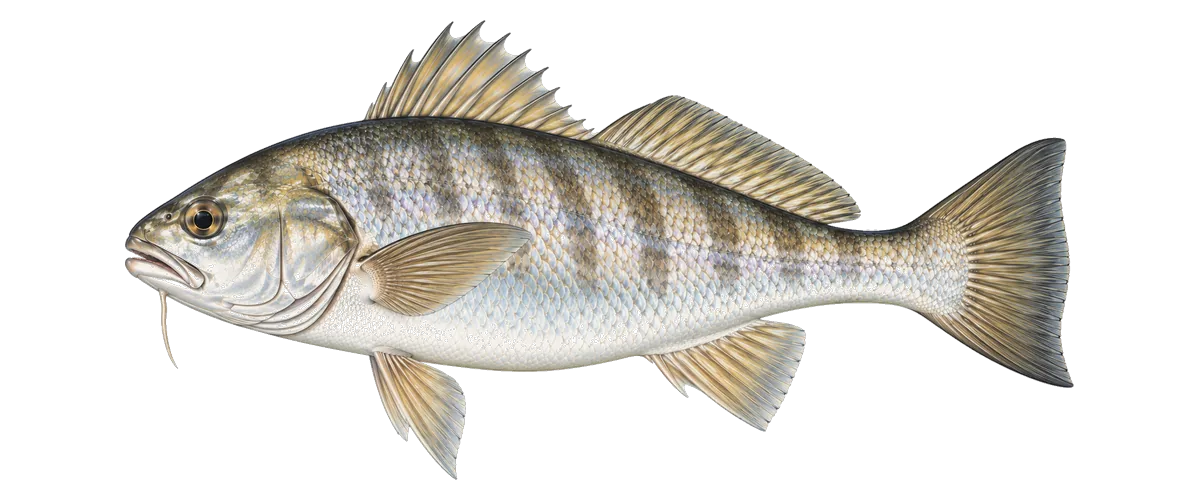
The same surf holds whiting, black drum and redfish. For those, see the best bait for black drum and the best bait for redfish.
Frequently asked questions
What is the best bait for pompano in the surf?
A live sand flea on a double-drop rig, cast into the first trough. Fresh shrimp, clams and Fishbites strips are the backups.
What is the best pompano rig?
A double-drop rig: two dropper loops with small circle hooks and bright foam floats, on a short length of leader heavier than your main line, with a pyramid or Sputnik sinker heavy enough to hold in the surf.
What color pompano jig is best?
Pink, yellow, chartreuse and white are the standards. Yellow and white in clear water, pink when it's murky or the light is low. Tip the jig with a little shrimp when the fish are picky.
What time of year is best for pompano?
It depends on where you are: spring and fall in the Florida Panhandle, Alabama and northeast Florida, and winter in central and south Florida, when the water elsewhere gets too cold for them.
Can you catch pompano with shrimp?
Yes. Fresh shrimp, peeled and cut small, is the most common substitute for sand fleas, and it works especially well around pier pilings.