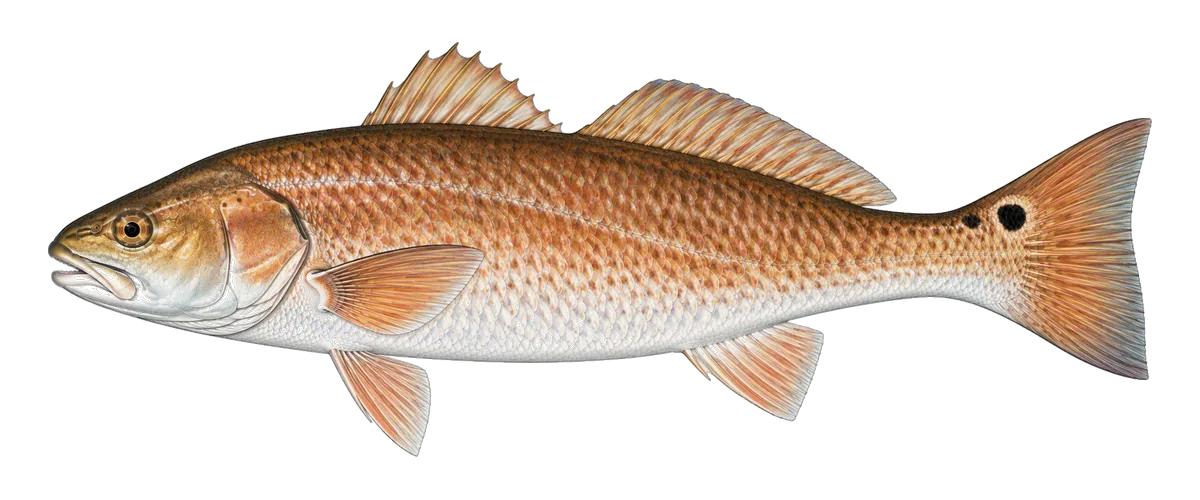
The best tide for redfish is a moving one. For most inshore water, the first couple of hours of the falling tide and the start of the rising tide are the best windows. On a falling tide, reds pull off the flats and out of the grass to creek mouths, drains, points and oyster edges, where the current funnels bait to them. On a rising tide, they push back up onto the flats, and on the big new- and full-moon tides they flood into the marsh grass to tail for fiddler crabs. At low tide they gather in the deepest water nearby, and at slack tide the bite usually slows.
Below: why tides matter to redfish, what reds do on each stage of the tide, flood tides in the marsh, spring and neap tides, wind tides on the Gulf coast, the best time of day, and a quick guide to the best tide by place.
Why tides matter to redfish
In The Spread's Seth Horne puts it simply: redfish follow the tide, and the tide delivers the food to them. Moving water flushes shrimp, crabs and small fish off the flats and out of the grass and funnels them through narrow spots, the drains, creek mouths and points where reds wait. When the water stops, the food stops coming to them, and they have to go looking for it.
That's why the stage of the tide tells you where to look. The same red that's tailing in 6 inches of water at high tide will be sitting in a creek bend at low tide.
Redfish on a rising tide
As the water starts to rise, reds move from the deeper water they waited in up onto the flats, marsh edges and mangrove shorelines. Horne finds the early flood often brings the most aggressive shallow-water feeding of the day, with reds moving up the flat right behind the rising water.
Where to fish it: the edges of flats nearest the deep water the reds spent the low tide in, then farther onto the flat as the water rises. Sandy potholes in the grass are ambush points. Homosassa guide Capt. William Toney targets the first summer flood of the morning, before heat and the high sun push fish off the flats.
Redfish at high tide and on flood tides
At high tide, reds spread out across the flooded flats and marsh edges, feeding on crabs, shrimp and small baitfish. They're harder to find because they're everywhere, so look for tailing fish, wakes and nervous water.
Flood tides in the marsh
On the Atlantic coast from the Carolinas to northeast Florida, the biggest high tides spill over the banks and flood the spartina grass. Redfish follow the water into the grass to feed on fiddler crabs and small blue crabs, and they feed head-down with their tails waving above the grass. It's some of the most exciting fishing on the coast.
- When: Florida Sportsman's Terry Lacoss, fishing the marshes around Fernandina Beach and Amelia Island, plans around the full and new moons, when tides of about 5.4 feet or higher flood the grass. A good flood can last three or four days. A hard northeast wind pushes even more ocean water into the marsh.
- Season: He finds October and the first week or so of November among the best times, with water at least 65 degrees, though late spring and summer floods work too.
- Get there early. Catches came within minutes of the water rising into the grass. Look for a major creek feeding the marsh, a mud bottom with oyster mounds, and mullet and wading birds on the flooded grass.
- How to fish it: pole, paddle or wade in quietly with the sun at your back. Lacoss's favorite lure is a 3/4-ounce gold spoon retrieved slowly into the fish's path; a light jig with a soft plastic shrimp and crab or shrimp flies work too. Keep the rod high once a fish is hooked, so it doesn't wrap the line in the grass.
- Wade carefully: wear long pants against the sharp grass and thick-soled shoes against the oysters.
Redfish on a falling tide
The falling tide is the one many redfish anglers trust most. As water drains off the flats and out of the marsh, reds pull back toward channels, creek mouths and drains, and Horne calls the falling tide particularly reliable because it concentrates baitfish and crustaceans. Fish stage along the grass edges, where he finds the day's largest fish are often caught.
Where to fish it:
- Creek mouths and drains, where bait gets flushed out. Reds often school up at the mouth and feed in turns.
- Points, on the down-current side, where they wait out of the main flow.
- Oyster bars, in the deeper pockets next to the bar as the water drops.
- Grass edges along the deeper water the fish are moving toward.
Anchor deep enough. Florida Sportsman's Shane Edgar warns that on an outgoing tide, a boat anchored on a flat can be stuck a long time waiting for the water to come back.
A popping cork with a shrimp or a jig drifted out of a drain on a falling tide is a classic way to fish it. See the popping cork rig.
Where do redfish go at low tide?
To the deepest water nearby. Horne finds low tide doesn't shut off the bite; it focuses it, with reds packed into channels, creek bends, depressions on the flats and drain mouths. Find the deep spots near where they fed on the high tide and you'll usually find the fish.
- In the marsh, reds gather in the deeper bends of the creeks and the holes at their mouths.
- On the flats, they hold in the potholes and along the channel edges.
- On very low tides, big reds may move out to passes, inlets and nearshore water.
- In Texas in winter, Bink Grimes finds tides can fall so low you can't reach the back lakes, and the reds that hold there pour out with the water. He waits for them at the mouths of the lakes and bayous.
Tailing reds at low tide
On some flats, low tide is the time to sight-fish. On Southwest Florida's grass flats, Edgar finds tailing reds most likely near the turn of the tide, in the last of the outgoing and the first of the incoming, with the water low enough to show their tails. The best days are the extreme low tides of the cool months. Average reds tail in about 6 inches to 2 feet of water.
Reading the flats and channels before you go makes all of this easier. Taklbox Pro shades charted depth on the map along the coasts, so the holes, channels and drop-offs near a flat stand out.
Redfish at slack tide
When the water stops moving, prey stops being funneled to the fish, and the bite usually slows. Horne treats slack as the time to move to the spot you want to fish when the next tide starts. If you stay, switch to live bait, smaller soft plastics or a popping cork, and work the fish that are still hunting.
Spring tides, neap tides and the moon
The moon sets how big the tides are. NOAA explains it this way:
- Spring tides come at the new and full moons, when the sun, moon and Earth line up. Highs are higher and lows are lower, and the current runs harder.
- Neap tides come at the first- and third-quarter moons, about seven days after a spring tide. Highs are a little lower and lows a little higher, and the water moves less.
For redfish, spring tides flood more shallow water and move more current. Horne finds bull reds feed noticeably harder then, and the marsh flood tides happen on them. Neap tides move less water and flood less of the shallows.
Every red you log in Taklbox is saved with its place, bait, tide, moon and barometer reading, so over a season you can see which tides and moons your best days came on.
Wind tides on the Gulf coast
Tides aren't the same everywhere, and on much of the Gulf coast they're small.
- Florida's coasts differ. James McCully notes in Florida Sportsman that the Atlantic has two highs and two lows a day, the Panhandle's Gulf coast usually just one of each, and Southwest Florida has mixed tides that can leave the water barely moving for six hours or more.
- Wind can beat the tide. Where the tide range is small, a few days of steady wind can raise or drop the water as much as the tide does. Edgar notes that north or east winds push the tide even lower on Southwest Florida's coast, and Lacoss that a northeast wind floods more of the marsh in northeast Florida. In Texas, Grimes finds that when the wind shifts and water returns, it covers the reefs and the reds move up onto them.
- An opposing wind can dampen a rising tide. Horne's advice then is to slow down, switch to live bait and fish the exact spots that hold fish.
The best time of day for redfish
Early and late. Edgar finds tailing best for a few hours after sunrise and before sunset, and weak in the middle of the day. In summer, Horne targets the early-morning flood before the heat pushes fish off the flats, and finds afternoon falling and low tides better as the fish look for deeper, cooler water. Topwaters work best early and late.
The best days line up a moving tide with low light: a falling tide at dawn, or a flood tide in the evening.
The best tide for redfish, by place
| Where | Best tide | Why |
|---|---|---|
| Creek mouths and drains | Falling | The current flushes bait out of the marsh to the reds |
| Grass flats | Early rising, and the turn at low tide | Reds move up onto the flat with the water; tails show in shallow water |
| Spartina marsh | Spring-tide flood, near high | Reds tail in the grass for fiddler crabs |
| Oyster bars | Any moving tide | The up-current edge at high tide, the deeper pockets as it falls |
| Creek bends, holes and channels | Low | Reds gather in the deepest water nearby |
| Passes and jetties | Strong moving water | Current carries bait past the rocks |
Oyster bars hold reds on every stage of the tide. Taklbox Pro marks mapped oyster beds, so you can plan where to be when the tide turns.
Redfish rules
Many reds caught on these tides are in the slot, and many aren't. Most states manage redfish with a slot, and Florida sets its rules by region. The cards below show three of the states where tides and redfish meet, from the data Taklbox checks your catch against, with the official links. For every state, see the redfish size limits by state.
Snap the red and Taklbox names it, measures it on iPhone Pro models, and checks the size, bag and season where you caught it.
For what to throw on each tide, see the best bait for redfish, and for where reds move as the water cools, where redfish go in the fall.
Frequently asked questions
What is the best tide for redfish?
A moving tide. The first couple of hours of the falling tide, at creek mouths, drains and points, and the start of the rising tide, on the edges of the flats, are the most reliable windows.
Is an incoming or outgoing tide better for redfish?
Both can be best; it depends on where you fish. An outgoing tide concentrates reds at drains, creek mouths and points. An incoming tide spreads them back over the flats and into the grass, where they feed aggressively in shallow water.
Where do redfish go at low tide?
To the deepest water nearby: creek bends, channels, holes on the flats and the mouths of drains. On very low tides, big reds may move out to passes and inlets.
Where do redfish go at high tide?
Onto the flooded flats and marsh edges, and on big spring tides into the marsh grass itself, where they tail for fiddler crabs.
What is a flood tide for redfish?
A high tide big enough to spill over the banks and flood the marsh grass. It usually comes on the new and full moons, and reds follow the water into the grass to feed.