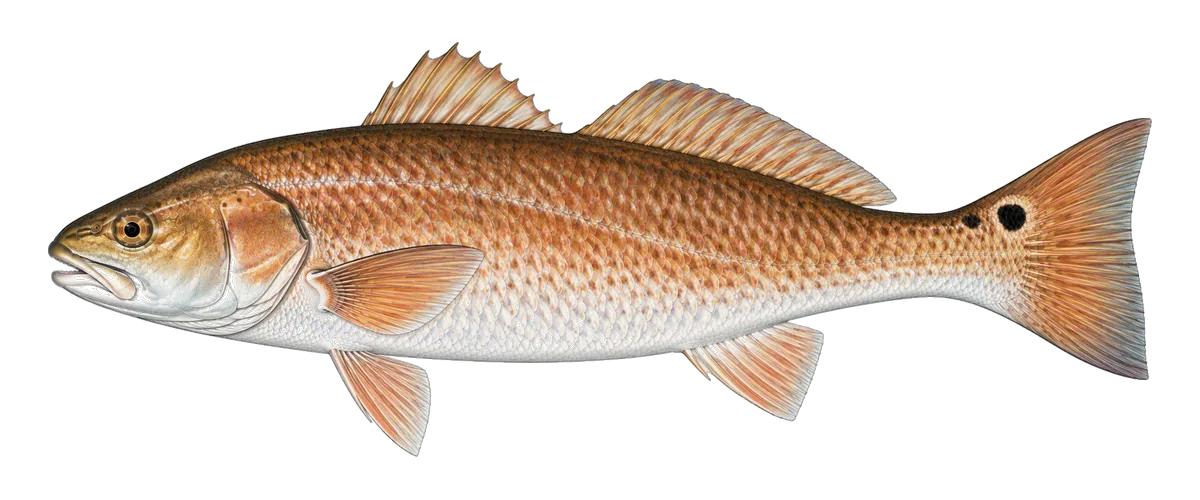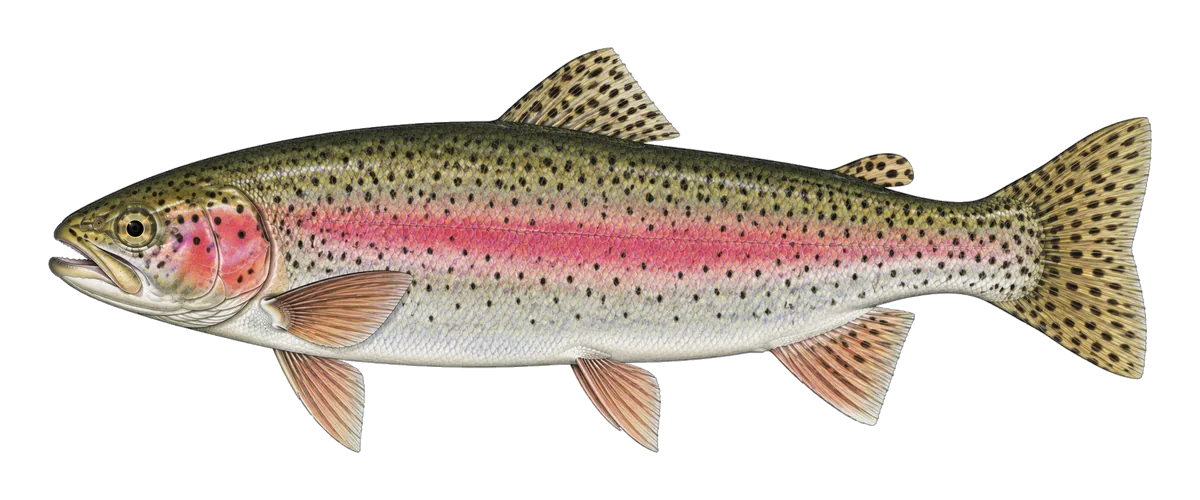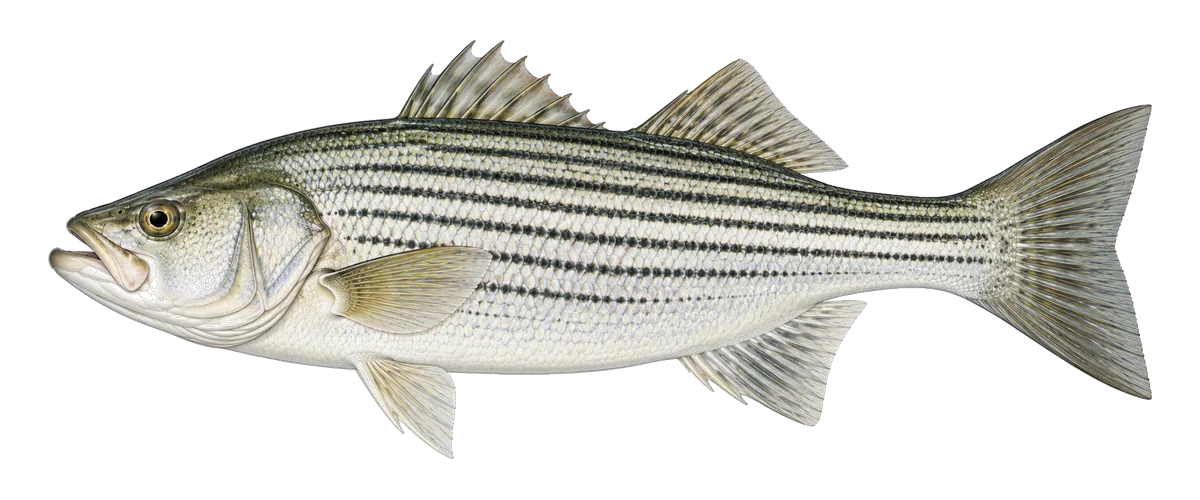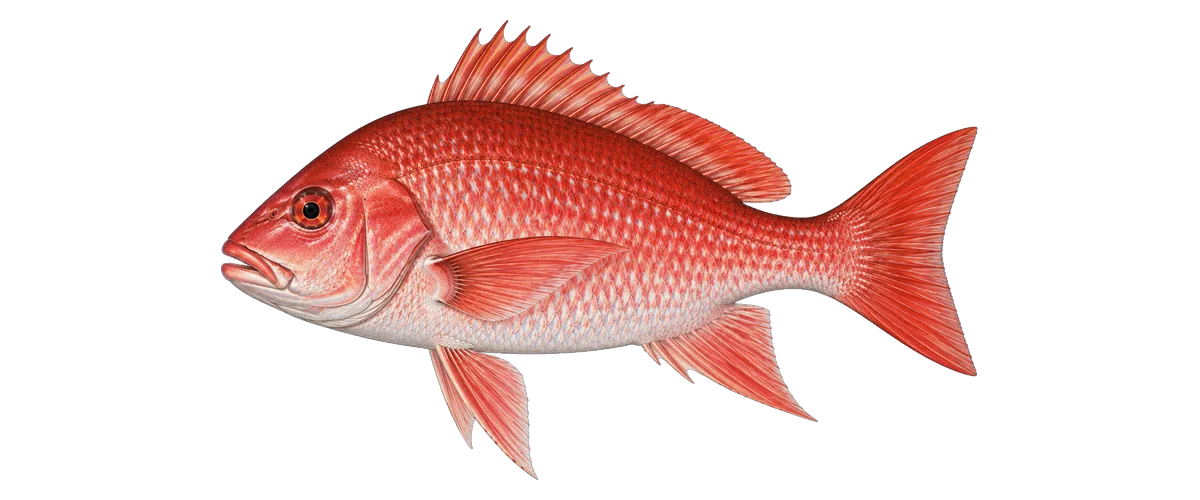
Mississippi's saltwater fishing regulations come from the Mississippi Department of Marine Resources (MDMR). Speckled trout, redfish, flounder and sheepshead have a minimum size and a daily limit, and redfish have a slot. Black drum, white trout, pompano and mullet have no limit at all. Red snapper, gag, greater amberjack and gray triggerfish have seasons that MDMR announces each year, and red snapper, gag and amberjack are closed for the rest of 2026. The inshore cards below are the same data Taklbox checks your catch against.
Below: what you need to fish salt water, the inshore limits, the nearshore fish, the red snapper season, the other reef fish seasons, state and federal waters, how Mississippi measures fish, and the landing and gear rules.
What you need to fish salt water in Mississippi
- A saltwater fishing license south of U.S. Highway 90, from 16 for visitors and 16 to 64 for residents. Residents 65 and older buy a cheap lifetime saltwater license instead. Between Highway 90 and Interstate 10, a freshwater license works too. Prices and exemptions are in do you need a fishing license in Mississippi.
- The Recreational Offshore Landing Permit (ROLP) to keep any snapper, amberjack, grouper, hind, triggerfish or cobia. It's free, every licensed angler on the boat needs one, and it runs through December 31 whenever you get it. Mangrove snapper caught inshore, north of the Intracoastal Waterway, don't need it. On a charter, the captain's ROLP covers the paying anglers. Anglers who don't need a license, like kids under 16, don't need one either.
- A Tails n' Scales trip number for red snapper. One angler per boat reports each red snapper trip through MDMR's Tails n' Scales app or website. MDMR says Marine Patrol officers who find anglers fishing for or holding red snapper without a trip authorization number will confiscate the fish and write fines.
Speckled trout limits
Speckled trout, or spotted seatrout, have a minimum size and a daily limit:
On a charter, the captain and crew can't keep their own limit of speckled trout. For the other Gulf states, see the speckled trout size limit by state.
Redfish limits
Mississippi manages redfish with a slot, and it bends the rule in one place: of the fish you keep, one may be longer than the top of the slot.
A slot means both ends count. See what is a slot limit and how Mississippi compares in redfish size limits by state.
Snap the fish and Taklbox checks the size, bag and season rules on file where you caught it, with a link to MDMR's limits every time.
Flounder limits
Mississippi's flounder rule covers every flounder in the genus, southern and Gulf flounder alike, whether you catch them on a rod or a gig:
Gigging takes the same saltwater license as rod and reel. For the other states, see the flounder size limit by state.
Sheepshead, black drum and the fish with no limit
Sheepshead have a minimum size and a daily limit:
Five common fish have no size or bag limit in Mississippi: black drum, sand seatrout (white trout), southern kingfish (ground mullet), Florida pompano and striped mullet.
Know which trout you have. White trout have no limit and speckled trout do, and a small speck can pass for a white trout at a glance. Snap the fish and Taklbox names it.
Mangrove snapper, tripletail, cobia and mackerel
Mangrove snapper, or gray snapper, count toward Mississippi's snapper aggregate along with the offshore snappers. Caught south of the Intracoastal Waterway, they also need the ROLP.
Tripletail hang under crab-trap floats, buoys and other floating cover:
Cobia have a minimum size measured to the fork, and keeping one takes the ROLP:
Spanish and king mackerel are both measured to the fork too. MDMR points anglers to the Gulf Council for any federal openings and closings.
Tarpon have a per-boat limit, and a big one has to stay in the water unless you're keeping it within the rules on the card:
Mississippi red snapper season
Mississippi sets its own red snapper season for private anglers and state-licensed charter boats. MDMR's executive director announces it each year in an opening order with the size and bag limits, and the season ends when Mississippi's private recreational quota is projected to be caught. It covers red snapper landed in Mississippi from state and federal waters: private anglers can fish out to 200 nautical miles, and state-licensed charter boats stay inside Mississippi's waters.
The 2026 season, from MDMR's notices:
- Opened at 12 a.m. on Friday, May 22, and closed at 11 p.m. on Sunday, July 5.
- Reopened for Labor Day weekend, September 4 through 7, then weekends while quota remained.
- Closed at 11 p.m. on September 27, with about 98% of Mississippi's private recreational quota landed. It stays closed for the rest of 2026.
While the season is closed, no red snapper may be landed or kept in Mississippi waters, even ones caught during another state's season. Federally permitted charter boats run on NOAA's separate for-hire season.
Taklbox doesn't have Mississippi's red snapper season on file yet, so check MDMR's red snapper page for the season, the size and the bag before you keep one.
Gag, amberjack and triggerfish seasons
These reef fish follow the federal seasons, and MDMR announces each opening and closing in Mississippi's waters. In 2026:
- Gag were open September 1 through September 30.
- Greater amberjack were open September 1 through October 13.
- Gray triggerfish closed on June 1 and reopened on August 1. NOAA's federal calendar also closes them from January 1 through the end of February.
The rest of the reef fish, from vermilion and lane snapper to red grouper and scamp, have limits on MDMR's limits page. Most count toward a snapper, grouper or reef fish aggregate, and the gag, triggerfish and vermilion limits are smaller ones inside those. Taklbox doesn't have these seasons on file yet either, so check MDMR's notices and NOAA's Gulf closures page before you keep any reef fish.
Reef fish gear:
- Circle hooks: federal law requires non-stainless steel circle hooks with natural bait for all reef fish: snappers, triggerfish, groupers and amberjacks.
- Descending device: the federal DESCEND Act requires a venting tool or descending device, rigged and ready, when fishing for reef fish in federal waters of the Gulf.
State waters and federal waters
For reef fish, Mississippi's waters run nine nautical miles south of the barrier islands. MDMR publishes the line's coordinates and GPX files on its red snapper page, so you can load it into a plotter.
Fish from another state's waters: MDMR's rules let you land fish in Mississippi that meet the size and bag limits of the waters where you legally caught them, as long as you hold that state's license. Where the other state sets no limit, Mississippi's applies. Red snapper caught outside Mississippi's waters are the exception.
Charter boats that meet MDMR's conditions, such as two Coast Guard-certified captains aboard, can carry a two-day limit of many offshore species. Charter captains and crew can't keep their own limit of red snapper, greater amberjack or speckled trout.
How Mississippi measures saltwater fish
MDMR sets minimums three ways:
- Total length, from the tip of the snout to the tip of the tail: speckled trout, redfish, flounder, sheepshead, tripletail, the snappers, the groupers and sharks.
- Fork length, from the tip of the snout to the fork of the tail: cobia, Spanish and king mackerel, greater amberjack, gray triggerfish, hogfish and tarpon.
- Curved and lower jaw fork lengths for the big offshore fish: tunas along the curve of the body, and swordfish and billfish from the lower jaw to the fork.
Measuring a cobia or a mackerel to the tip of the tail makes it look longer than the rule counts it. On iPhone Pro models, Taklbox measures the fish from the photo you take of it. To do it by hand, see how to measure a fish.
Landing, gear and other rules
From MDMR's finfish rules:
- Land fish whole. Heads, tails and flesh stay on until you reach your final destination. You can gut, scale and remove the gills.
- The fillet exception: a boat out more than 24 hours, with a float plan filed with MDMR before it leaves, may carry fillets, but no more than one day's limit per species.
- No selling. Fish caught with a recreational license can't be sold or traded, and they can't be brought into a building where a seafood dealer buys, sells or processes fish.
- Set poles: you have to stay within 50 feet of them, each takes a single hook, and one angler may fish up to ten south of I-10.
- Trotlines south of I-10 have to be registered with MDMR every year and tagged with their number at both ends.
- Fishing reefs: in the permitted fish havens and on Cat Island Reef, no more than three hooks per line, and no spearguns with power heads.
- Off limits: goliath and Nassau grouper, sawfish, longbill spearfish and the protected sharks can't be kept, and finning a shark is illegal. Bluefin tuna can be landed only as an incidental catch, and each one has to be reported to MDMR.
Frequently asked questions
How many speckled trout can you keep in Mississippi?
Speckled trout have a minimum size and a daily limit, both on the card above, and the possession limit is the same as the daily limit.
What is the redfish limit in Mississippi?
Mississippi manages redfish with a slot and a daily limit, shown on the card above, and one of your fish may be longer than the slot.
When is red snapper season in Mississippi?
MDMR sets it each year. In 2026 it opened May 22, closed July 5, reopened Labor Day weekend and then weekends, and closed for the rest of the year on September 27.
Is there a limit on black drum in Mississippi?
No. Black drum have no size or bag limit in Mississippi, and neither do white trout, ground mullet, pompano or striped mullet.
Do you need a saltwater fishing license in Mississippi?
South of Highway 90, yes, from age 16. Offshore anglers also need the free ROLP to keep reef fish or cobia, and red snapper trips need a Tails n' Scales report.