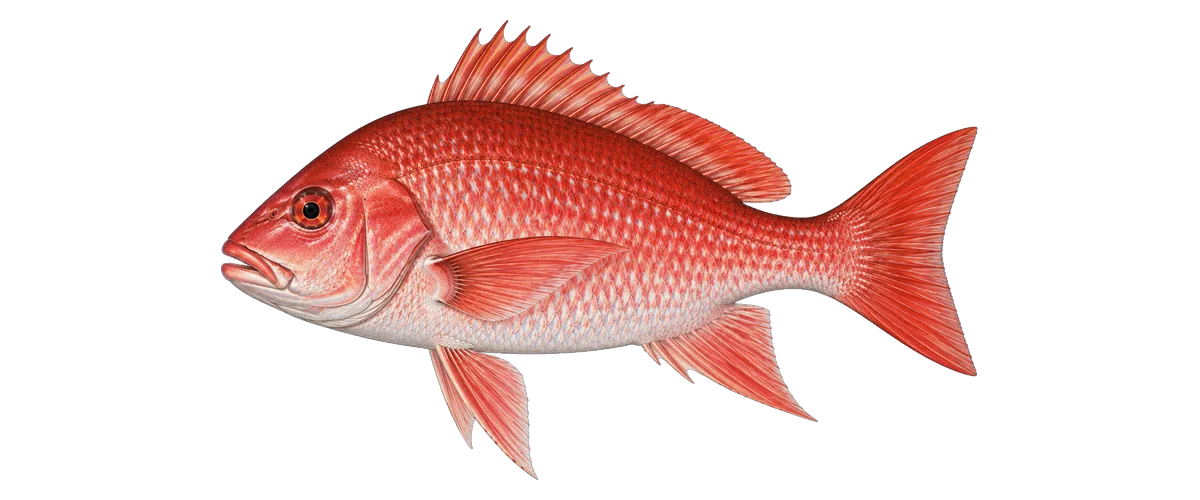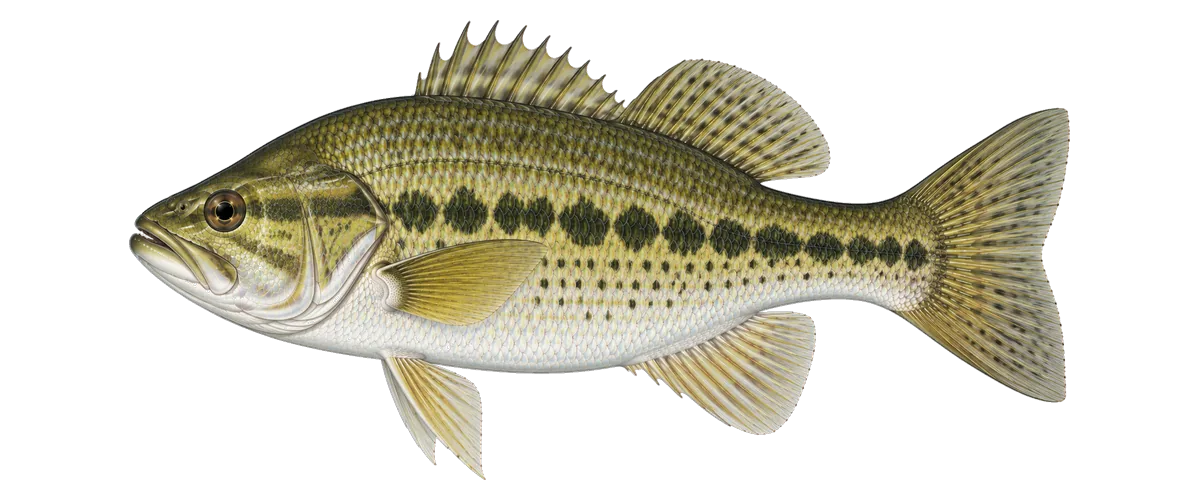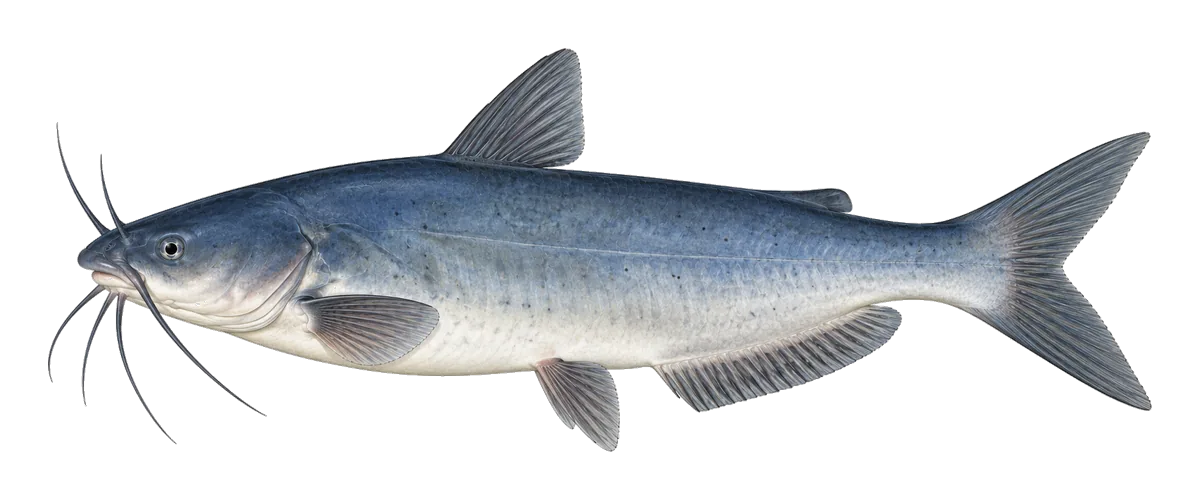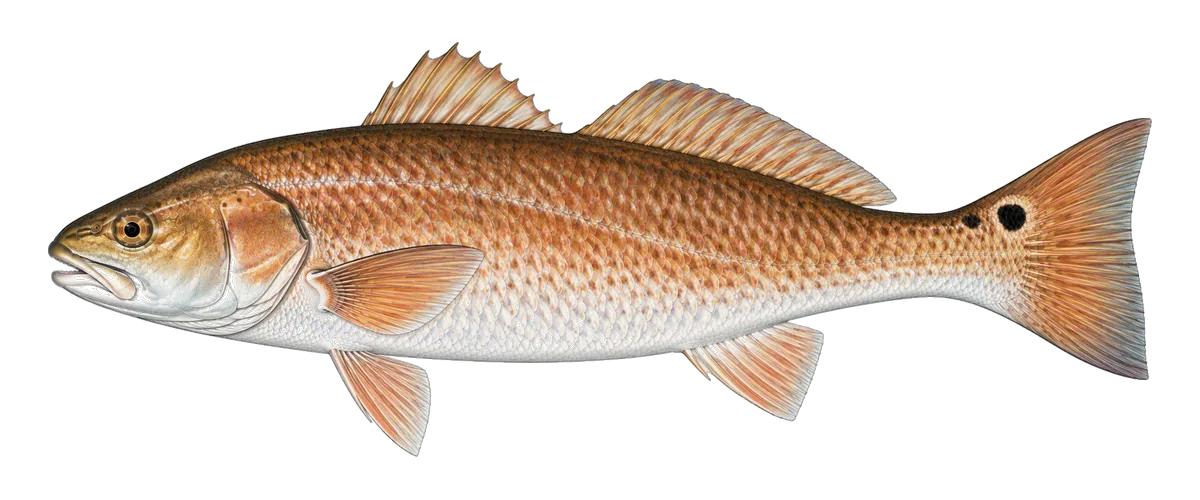
A slot limit is a size window set by a fishing regulation. Most of the time it means a harvest slot: you may keep a fish only if it's at least the minimum size and no longer than the maximum, and anything shorter or longer goes back. A protected slot works the other way around: fish inside the window must be released, and you may keep fish smaller than it, and sometimes a few larger. Redfish, snook and speckled trout are managed with harvest slots; protected slots are common on bass lakes.
Below: the two kinds of slot side by side, why fisheries managers use them, real slots for redfish, snook, trout, striped bass and bass from the data Taklbox checks your catch against, how to measure a fish for a slot, and what to do with one that's outside it.
What is a slot limit?
Every size limit says which fish you may keep by length. Minnesota's Department of Natural Resources describes the four basic kinds:
- A minimum size limit bans keeping fish below a length. It lets young fish grow up and spawn before they can be kept, and it's the most common size limit there is.
- A maximum size limit bans keeping fish above a length. It's rare, and used where few mature fish are left.
- A harvest slot allows keeping fish only within a range of lengths. It's a minimum and a maximum together.
- A protected slot bans keeping fish within a range of lengths. Anglers can keep the smaller fish, which are usually plentiful, and some larger ones, while the middle sizes, the ones most likely to spawn, go back.
Anglers and biologists don't always mean the same thing by "slot limit." Most anglers mean a harvest slot, the window you can keep. Freshwater biologists often mean a protected slot. When a regulation says "slot," read whether the fish in it are the ones you keep or the ones you release.
Harvest slot vs protected slot
| Harvest slot | Protected slot | |
|---|---|---|
| Fish inside the range | Can be kept | Must be released |
| Fish below the range | Released | Can be kept |
| Fish above the range | Released, unless a "one over" allowance or tag applies | Often a few can be kept |
| What it protects | The young fish and the biggest breeders | The mid-sized spawners |
| Where you'll see it | Redfish, snook, speckled trout, striped bass | Bass, pike and walleye lakes |
A "slot restriction" is the same thing as a slot limit, and it can be either kind.
Why fisheries use slot limits
Big females are worth the most. In a 2014 paper, Mark Hixon of the University of Hawaii and colleagues at NOAA Fisheries and Cal State Long Beach summed up the case for "big old fat fecund female fish." Larger females produce far more eggs than smaller ones: in Hawaii, a 27-inch bluefin trevally produces 84 times as many as a 12-inch fish. Their eggs can be better quality too, hatching into young that grow and survive better. And old females often spawn at different times and places than young ones, which spreads the odds that some of their young find good conditions.
One of the tools the authors recommend is a slot that lets anglers take only medium-sized fish.
Redfish are the textbook case. Red drum spend their first few years inshore, where anglers catch them, and move offshore to spawn at about the size a slot tops out. South Carolina's Department of Natural Resources puts it simply: the more restrictive the regulations, the more young redfish survive to spawn, and the healthier the adult population.
Slots can steer the catch. When a strong year class of striped bass, the fish born in 2015, grew into the legal range along the Atlantic coast, the Atlantic States Marine Fisheries Commission narrowed the ocean slot to cut the harvest of those fish and help the stock rebuild. A slot can be moved as the fish grow.
Protected slots fix crowded lakes. In a lake with plenty of small bass and few big ones, a protected slot lets anglers keep the abundant small fish while the middle sizes grow up. Over time, that's meant to give the lake more big fish.
Slot limits for redfish
Almost every state with redfish uses a harvest slot. Florida's is the same in every region open to harvest, though the vessel limit differs, and the Indian River Lagoon is catch-and-release only. Texas adds a twist: a Red Drum Tag, which comes with the saltwater fishing endorsement, lets you keep one red over the slot each license year, in addition to the daily bag. For every state, see the redfish size limits by state.
Slot limits for snook and speckled trout
Snook. Florida manages snook with a harvest slot measured in total length, a small daily bag and a closed season that varies by region. The slot's top end is a little lower on the Atlantic coast than on the Gulf. For the details, see when is snook season in Florida.
Speckled trout. Most states with trout use a slot, and several pair it with a "one over" allowance. In Florida, some regions allow one trout over the slot per vessel within the bag. Texas allows one over the slot each license year with a Spotted Seatrout Tag, plus one more with a bonus tag. Every state's trout rules are in speckled trout size limits by state.
The striped bass ocean slot
Atlantic striped bass are managed coastwide by the Atlantic States Marine Fisheries Commission. After a 2019 assessment found the stock overfished, the commission set a recreational slot for ocean waters in 2020, and in 2024 it narrowed the slot and kept the bag at one fish to help the stock rebuild. States from Maine to North Carolina apply it in their ocean waters, and several also require circle hooks when fishing with bait, as the Massachusetts card shows. For more on striped bass, see the best bait for striped bass.
Protected slot limits on bass lakes
Protected slots are a freshwater tool, used lake by lake. A state usually sets a statewide rule for bass and then a protected slot on particular lakes where the biologists want more big fish. You keep bass under the slot, release every bass inside it, and on many lakes may keep one or a few over it.
Louisiana's card shows how that looks: a statewide rule, then lakes and rivers with their own protected slots. Delaware's smallmouth bass rule is a protected slot statewide.
How to measure a fish for a slot
With a slot, a bad measurement can get you at both ends: a fish that's a hair short, or a hair long. Measure the way the rule says, usually total length:
- Lay the fish on its side on a measuring board, with its mouth closed and its nose against the stop.
- Squeeze the tail lobes together. FWC measures total length to the farthest tip of the tail, with the tail compressed.
- Read the length in a straight line, never over the curve of the body.
Some species use fork length instead, measured to the fork of the tail. Check which one the rule uses; it's printed on each card. Near the top of a slot, squeezing the tail can turn a keeper into a fish that has to go back. For the full method, see how to measure a fish.
On iPhone Pro models, Taklbox measures the fish's length from your photo, so you can see where it sits against the slot before you decide. For a fish right at either end, a board is the final word.
What to do with a fish outside the slot
Release it, and quickly. A fish that's over the slot is usually a big breeder, exactly the fish the rule exists to protect.
- Keep it in the water as much as you can, and support a big fish's belly if you lift it for a photo.
- Wet your hands before you touch it, to protect its slime coat.
- Revive it if it's tired: hold it upright, facing into the current, until it kicks away.
Keeping a fish outside the slot is a violation in every state that sets one, and a "one over" allowance only applies where the rule says so. Slot rules also change at region lines and state lines, and between seasons. Snap the fish and Taklbox names it, measures it on iPhone Pro models, and checks the size, bag and season where you caught it, with a link to the official rules.
Frequently asked questions
What does slot limit mean in fishing?
It's a size window. Usually it means you may keep fish only between a minimum and a maximum length; fish under or over it must be released.
What is a protected slot limit?
A protected slot is a size range in which every fish must be released. You may keep fish shorter than the range, and on many waters one or a few longer. It's common on bass lakes.
What is a slot restriction?
Another name for a slot limit. It can mean a harvest slot or a protected slot, so read whether the fish inside the range are the ones you keep or the ones you release.
Can you keep a fish over the slot?
Only where the rule allows it. Texas allows one redfish and one speckled trout over the slot each license year with a tag, and some Florida regions allow one trout over the slot per vessel. Otherwise, an over-slot fish goes back.
Why do fish have a maximum size limit?
To protect the biggest breeders. Large females produce far more eggs than small ones, and often better ones, so letting them go keeps more young fish coming.