On Florida's Atlantic coast, the fall mullet run builds through September and peaks in October from Fernandina to Miami, reaching north Florida first and south Florida last. It's mostly young silver mullet, 4 or 5 inches long, swimming south down the beaches, with snook, tarpon, jacks, sharks and bluefish following them. On the Gulf coast, the bigger event comes later: adult striped mullet school up and head offshore to spawn after cold fronts from about November through January.
Below: what the mullet run is, when it reaches each part of Florida, what sets it off, where and how to fish it, the rules for the fish that follow it, and the mullet run in North Carolina and Texas.
What is the mullet run?
"The mullet run" means two different migrations, and it helps to know which one you're fishing.
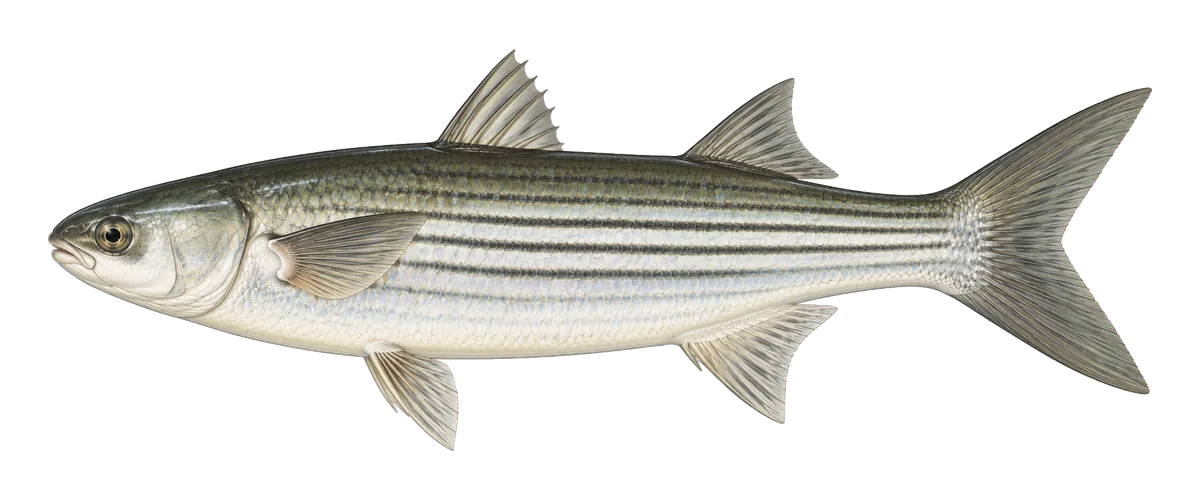
The fall run of finger mullet. Florida Sportsman's Mike Holliday explains that the east coast run is mostly silver mullet, also called white mullet, in the 4- to 5-inch range. Silver mullet spawn offshore in spring, and the Gulf Stream carries their larvae north. The young grow up in estuaries as far north as North Carolina, then head south down the beaches as the water cools. They don't tolerate water much below about 68 degrees. You can tell a silver from a young striped mullet by the black edge on its tail.
The roe run of adult striped mullet. Striped mullet, the bigger "black" mullet, leave the rivers, canals and Intracoastal in the fall, gather in big schools in the lower estuaries, and move offshore to spawn. Dr. Behzad Mahmoudi of FWC's Fish and Wildlife Research Institute told Florida Sportsman they spawn from November through January, moving offshore with the passage of a cold front, often at night on the outgoing tide. Holliday puts the striped mullet spawn from October through December.
Either way, a lot of bait moves past the beaches and inlets in a few weeks, and every predator on the coast knows it.
When is the mullet run in Florida?
The run moves south with the cold, so it reaches each part of the coast at a different time, and it shifts from year to year with the weather.
- Northeast Florida (Fernandina, Jacksonville, St. Augustine): the first stretch of Florida the bait reaches on its way south, so the run shows here earlier than farther down the coast.
- Central east coast (Daytona, New Smyrna, Ponce Inlet, Cocoa, Sebastian): In The Spread's Seth Horne finds the Sebastian Inlet run most reliable from the middle of September through October, with many of the best pulses of bait from late September into early October.
- Treasure Coast and Southeast Florida (Stuart, Jupiter, Palm Beach, Miami): Sport Fishing's Steve Waters calls October the prime time to fish the run, inshore and offshore, from Stuart south to Key Largo.
- The whole east coast: Holliday puts the peak in October from Fernandina to Miami.
- The Gulf coast: Holliday finds activity begins in September. The roe run of adult striped mullet follows from late fall into winter, after the cold fronts.
Each cold front sends a new push of bait down the beach, so a quiet week can turn back on after the next front.
What triggers the mullet run
Shorter days start it; cooling water releases it. Horne finds day length starts the migration and a cooling trend releases each pulse of bait. He watches for the water to drop about 3 to 6 degrees over a week or two, which matters more than any single temperature reading.
Cold fronts and northeast wind. North Carolina Aquarium naturalist Wayne Justice told Salt Water Sportsman that the big fall push comes when the winds switch to the northeast. Horne finds the first clean, fishable morning after a front is often the best of the run.
For the roe run, the barometer. Mahmoudi found striped mullet school up as the barometer falls ahead of a cold front, and move offshore with its passage.
Every catch you log during the run is saved with its place, tide, moon and barometer reading, so next fall you can see which fronts and tides brought the best days.
Where to fish the mullet run in Florida
- Beaches and the troughs along them. The bait travels just behind the breakers, and predators push it against the beach. Watch for nervous water, bait spraying out of the water, and birds.
- Inlets and jetties. Jetties stop the southbound mullet and current pins them against the rocks. Horne fishes the north-side beach at Sebastian for fresh bait coming down, then the jetties and inlet rock where moving water stacks it up. At Stuart's St. Lucie Inlet, Capt. Greg Snyder finds snook use the rocks as a trap.
- Inside the inlets. Waters fished the St. Lucie River, where snook and tarpon wait at the edges of submerged oyster bars for mullet to swim past.
- Piers and bridges, and under the lights at night, where mullet pause in the light and snook and tarpon strike.
- The edges of the school, not the middle. Horne finds predators patrol the front, the sides, the bottom and the trailing edge of a school.
Taklbox Pro maps boat ramps and fishing piers, so you can find a launch or a pier near where the bait is running.
What follows the mullet
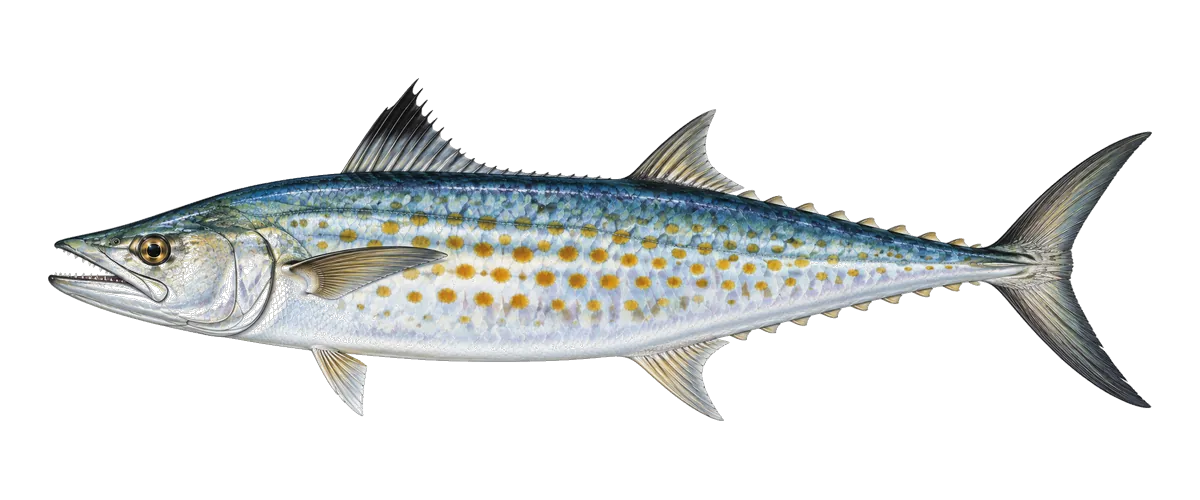
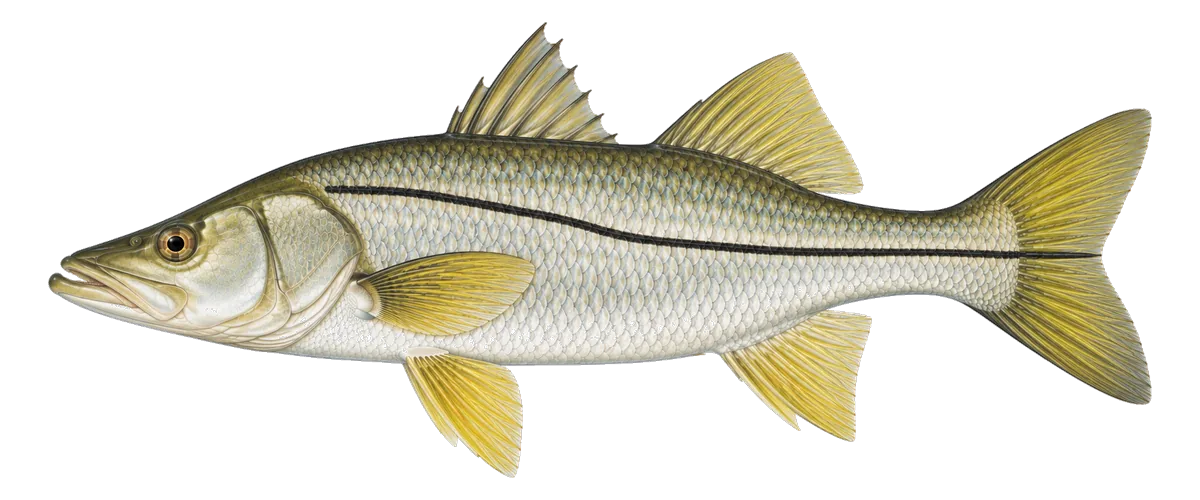
Snook, tarpon, jack crevalle, sharks, Spanish mackerel and bluefish all follow the run, and redfish feed on it too. Some notes from the guides:
- Snook gorge early. D.O.A. founder Mark Nichols told Sport Fishing the fish are all over the mullet at the start of the run, but after about three weeks they wanted something different.
- Tarpon hold on the outside edges of the schools and on the current seams at the inlets.
- Jacks hit the front and the corners of a school. Capt. Chris Murray calls the big jacks great practice for snook and tarpon.
- Sharks follow too, and they'll take a hooked fish. Horne's advice: if sharks start tracking your fish, land it fast, release it, and move.
For more on snook, see the best bait for snook.
How to fish the mullet run
Live mullet
The run puts the best bait in Florida right in front of you.
- Catch them. Throw a cast net over a pod of mullet; a net with small mesh and a quick sink suits finger mullet.
- Match the size to the fish. Horne finds finger mullet best for snook, jacks and smaller tarpon, medium mullet the most versatile, and big mullet the bait for trophy tarpon, big snook and sharks.
- Hook it so it swims. Murray hooks a mullet through the upper lip, casts it to the edge of an oyster bar or a school, and opens the bail to let it swim off. He fishes a 7-foot light-to-medium spinning rod, a 4000-size reel, 20-pound braid, fluorocarbon leader, a 3/0 circle hook and a small float.
- Make it look hurt. Captains clip a mullet's tail or skip it off the deck so it swims like an injured fish. A mullet knocked to the bottom by the feeding also works fished on the bottom.
Lures
Topwater plugs, spoons and soft plastics all catch fish in the run, and on some days they outfish live bait.
- Soft plastic shrimp for snook and tarpon. Nichols's advice: if you're not catching fish with a shrimp, you're fishing it too fast.
- Walking topwaters, poppers, spoons and paddletails for jacks, worked fast across the front of a school.
- A swimbait or twitchbait the size of the mullet when fish are full of live bait. Holliday finds the size of a lure's silhouette matters more than its color.
At night, Holliday works a topwater toward a dock or bridge light, then stops it as it enters the light and lets the wind and current drift it through. Mullet often freeze in the light, and that's when snook and tarpon hit. On many nights he finds it outfishes a steady retrieve three to one.
Tackle. Horne steps up for the run: medium-heavy spinning gear for jacks and snook, heavy spinning gear for tarpon, and a heavier leader where sharks are around.
Mullet run rules: snook, tarpon and mullet
The fall run lands in Florida's fall snook season on the Atlantic coast, and snook are one of the run's main predators. Florida's snook rules use a slot and a closed season that differ by region, and keeping one needs a snook permit with your saltwater license. For more, see when is snook season in Florida.
Tarpon in Florida are catch-and-release, and a big one has to stay in the water.
Mullet themselves have a daily bag and a vessel limit in Florida, and the vessel limit is lower during the fall and winter. The rule covers striped, silver, fantail and redeye mullet.
Snap whatever you catch in the run and Taklbox names it, measures it on iPhone Pro models, and checks the size, bag and season where you caught it.
The mullet run in North Carolina and Texas
North Carolina. The finger mullet that run Florida's beaches grow up in Carolina estuaries. Justice finds they leave for the ocean when the wind switches to the northeast in the fall, and he fishes the run around Cape Lookout and Shackleford Banks. Salt Water Sportsman puts the run from September to November from New York to North Carolina. Red drum, speckled trout, flounder, bluefish and Spanish mackerel all feed on it. Justice slides a live mullet along the bottom on an egg-sinker rig, with a circle hook for red drum and bluefish.
Texas. On the Padre Island National Seashore, Billy Sandifer found the year's best surf fishing ran from mid-August through mid-December, with the mullet run usually starting at the first cold front of the season. Redfish leave the bays with the mullet, and jacks, tarpon, Spanish mackerel, bluefish and sharks feed on the bait in the guts. His tip: the best fishing often comes in the lull between cold fronts. Texas Parks and Wildlife says striped mullet there spawn offshore from late October to December, and Texas sets a winter length limit on them, which the card shows. For where reds go in the run, see where redfish go in the fall.
Frequently asked questions
When is the mullet run in Florida?
On the east coast it builds through September and peaks in October, reaching north Florida first and south Florida last. On the Gulf coast, adult striped mullet run offshore to spawn in late fall and winter.
When is the mullet run in Sebastian?
Most reliably from mid-September through October, with many of the best pushes of bait from late September into early October. The first clean morning after a cold front is often the best day.
When is the mullet run in south Florida?
October is the prime month from Stuart and Jupiter south to Miami and Key Largo.
Is there a mullet run on the Gulf coast of Florida?
Yes. Activity begins in September, and in late fall and winter, adult striped mullet school up and move offshore to spawn after cold fronts, a migration often called the roe run.
When is the mullet run in North Carolina?
In the fall, roughly September through November, when the wind turns northeast and the water cools. The Carolina estuaries are where many of Florida's run mullet grow up.