You can fish for trout in Great Smoky Mountains National Park all year, in every stream, with a Tennessee or North Carolina fishing license from age 16 and no trout stamp. The park allows only artificial flies and lures with a single hook, and no bait of any kind. It sets its own size minimum and daily limit, and every trout in it is wild: brook trout, the only native, plus rainbows and browns.
Below: the license, the park's rules and why they're strict, telling the three trout apart, the best streams on the Tennessee and North Carolina sides, smallmouth bass, Cherokee and Gatlinburg, when to go and what flies to bring, and staying safe on the water.
Do you need a fishing license in the Smoky Mountains?
Yes, from age 16. The National Park Service (NPS) requires a valid fishing license or permit from Tennessee or North Carolina, and either state's license covers the whole park, on both sides of the state line.
- No trout stamp is required inside the park.
- Licenses aren't sold in the park. Buy one online or in a town outside it before you go.
- Outside the park, the states' own rules apply again. Tennessee requires a license from 13 and trout privileges to fish for trout. North Carolina requires one from 16.
- Gatlinburg and Cherokee each require their own permit, below.
For prices and exemptions, see do you need a fishing license in Tennessee or the Carolinas license guide.
Smoky Mountains fishing regulations
The park's rules, from its fishing page:
- When and where: all year, in all streams, from 30 minutes before sunrise to 30 minutes after sunset.
- One hand-held rod.
- Artificial flies or lures with a single hook only. Dropper flies are allowed, up to two flies on a leader. Double, treble and gang hooks are banned.
- No bait, and no scent. The ban covers having it with you along a park stream while you carry fishing tackle, not just fishing it. The NPS lists live or preserved minnows, worms, corn, cheese, bread, salmon eggs, pork rinds, liquid scents and natural baits you find along the stream.
- Size and daily limits: the park sets a minimum size for trout and smallmouth bass, and one daily limit for brook, rainbow and brown trout and smallmouth combined. Rock bass have a separate limit. A fish under the minimum goes back right away, and once you reach the limit you have to stop fishing.
- Inspection: authorized park staff can check your tackle, your creel and any fish you have.
The park's numbers are on the NPS fishing page. They're stricter than Tennessee's statewide rule, and they aren't on file in Taklbox yet, so check the NPS page before you keep a fish.
Why so strict? The NPS bans bait to keep non-native species out of park streams, since anglers can release them by accident when they dump unused bait. It also notes that corn and bread lead to more fish dying after release, and treble hooks kill more fish that have to go back.
Brook trout are fair game again. In the early 1900s, the NPS says, logging and the introduction of rainbow trout destroyed 75% of the brook trout's habitat. After research and restoration work, the park reopened brook trout fishing in 2006, following a 30-year ban, and a three-year study found that adult brook trout bred as well with fishing as without it.
Brook, rainbow or brown trout?
The park stopped stocking trout in 1975 and now stocks only to restore native species like the smoky madtom, so you're catching wild trout. The NPS describes the three this way:
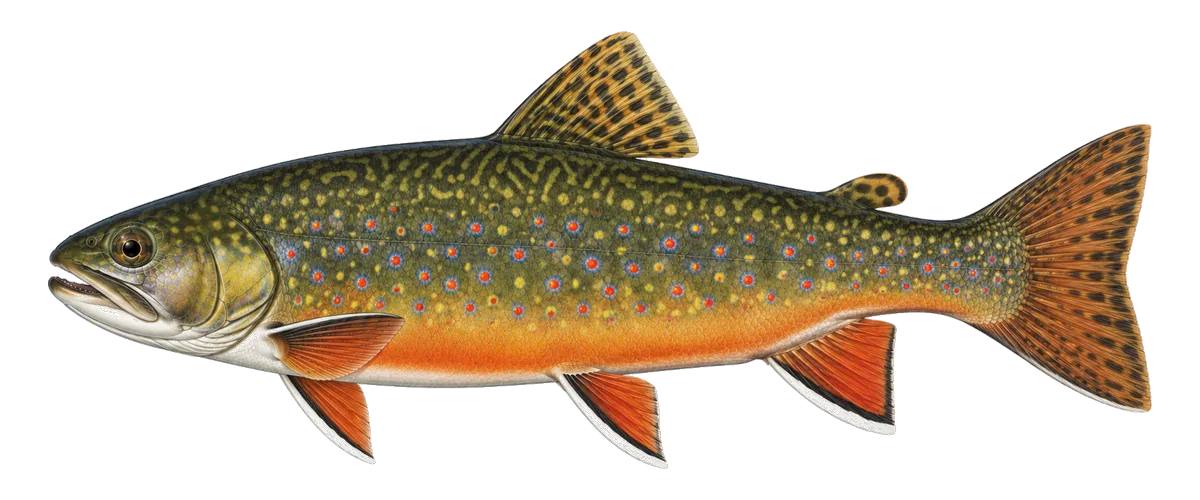
- Brook trout: dark olive-green or blue-green, with worm-like markings across the back, red spots, and orange-and-black fins edged in white. Most at home in the high, steep, shaded headwaters.
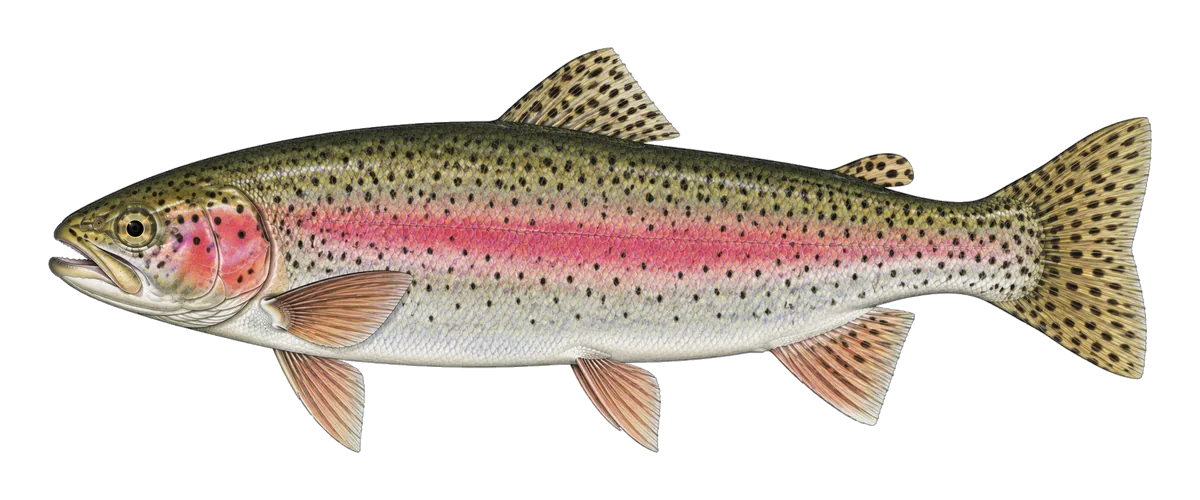
- Rainbow trout: a light, silvery or pale-blue body with dark spots and a pink stripe down the side, sometimes with a pink cheek.
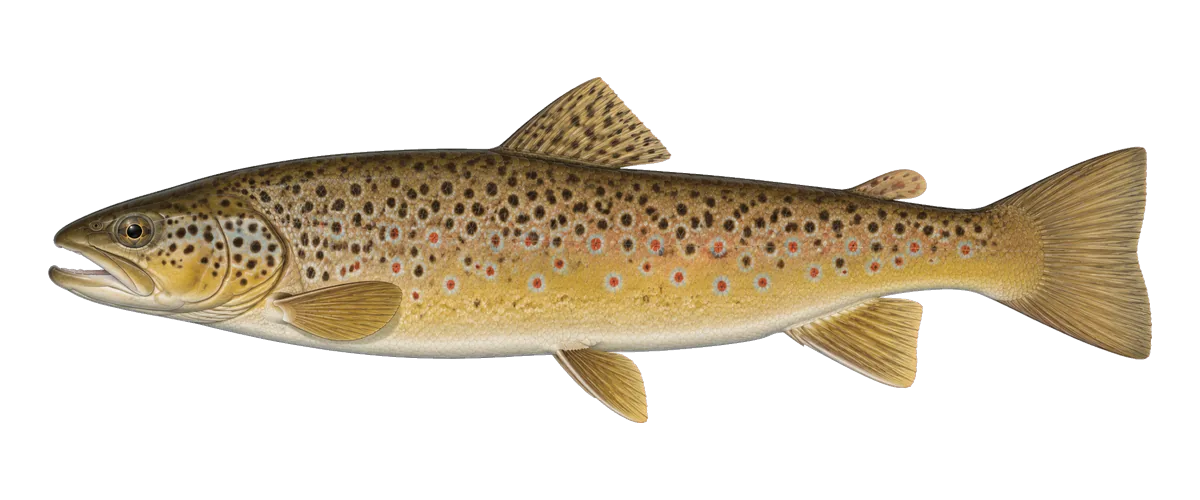
- Brown trout: light to golden-brown, with dark or red spots ringed in white.
Snap the fish and Taklbox names it on the phone itself, with no signal, which helps in the backcountry.
Where to trout fish in the Smoky Mountains: Tennessee side
The Little River is the big watershed on the Tennessee side, and it's really three streams, called prongs.
- East Prong: Little River Road follows it from Elkmont down to the "Y" near the Townsend entrance. Orvis's Little River fishing report says the best trout fishing starts around the giant plunge pools at the Sinks, and the biggest rainbows and browns are often between Metcalf Bottoms and Elkmont. Upstream of the campground it gets narrower and rougher, with brook trout and wild rainbows. The lower roadside water holds smallmouth bass.
- Middle Prong (Tremont): about 9 miles long, with the lower 4 or so reachable by road. Trout Unlimited's Hiwassee chapter calls it excellent dry-fly water, with wild rainbows down low and brook trout up high, and an easy stream for kids.
- West Prong: runs about 2 miles along Laurel Creek Road, the road to Cades Cove, with wild rainbows and brook trout. Anglers in a hurry to see Cades Cove often drive right past it.
Abrams Creek flows out of Cades Cove to the Little Tennessee River, split by Abrams Falls. Lower Abrams is home to three federally protected fish, so watch your footing and leave the rocks where they are.
Where to trout fish in the Smoky Mountains: North Carolina side
Carolina Sportsman picks four of the more accessible North Carolina streams:
- Deep Creek, near Bryson City. Big water with wide pools and long runs, an even mix of browns and rainbows, and known for big browns. Tubers crowd the lower creek in summer, but in winter and early spring you may have it to yourself.
- Bradley Fork, a tributary of the Oconaluftee River at Smokemont Campground, off U.S. 441 north of Cherokee. Plenty of rainbows and browns, though not big ones, with most of the browns down low near the campground.
- Cataloochee Creek, in Haywood County. Flatter and shallower than a typical mountain stream, mostly rainbows, and elk in the valley.
- Big Creek, also in Haywood County. Big browns in the lower creek, rainbows higher up, and water so clear the trout spook before you can cast.
All four take some effort, so the pressure is light to moderate, especially in winter.
Smallmouth bass in the Smokies
The lower, warmer streams hold smallmouth bass and rock bass. The NPS points smallmouth anglers to:
- the first few miles of the West Prong of the Little Pigeon River,
- creeks running into Fontana Lake, like Eagle, Hazel and Noland creeks,
- the East Prong of the Little River from Townsend to the Sinks, easy to reach but with fewer bass,
- Abrams Creek from Chilhowee Reservoir up to Abrams Falls, full of smallmouth but hard to get to.
Tennessee has issued a precautionary fish consumption advisory for smallmouth bass from Abrams Creek and the Little River.
Fishing in Cherokee and Gatlinburg
Cherokee: the streams on the Qualla Boundary, the Eastern Band of Cherokee Indians' land next to the park, are Cherokee Enterprise Waters. They need a tribal fishing permit for everyone 12 and older, and a North Carolina license isn't accepted there. Kids under 12 fish free with a permitted adult. The general waters open on the last Saturday of March after a two-week closure. A catch-and-release trophy section on the Raven Fork stays open all year and takes an extra special-use permit. Details are on Fish Cherokee.
Gatlinburg: the West Prong, Roaring Fork, Dudley Creek and LeConte Creek flow out of the park into town, where the city stocks them, closes them on Thursdays and requires its own license or permit. See Gatlinburg trout fishing.
When to trout fish in the Smoky Mountains
The park is open all year, and each season fishes differently. North Carolina's Wildlife Resources Commission publishes a hatch chart for the state's mountain streams, just across the line from the park's North Carolina side:
| Months | What's hatching | Flies to try |
|---|---|---|
| January to March | Midges, blue-winged olives, early black stoneflies, then blue quills and quill Gordons in late March | Griffith's Gnat, Blue-Winged Olive, Adams, Quill Gordon |
| April | Hendricksons, March browns, giant stoneflies, black and mottled brown caddis | Hendrickson, March Brown, Stimulator, Elk Hair Caddis |
| May and June | Light Cahills, sulphurs, yellow stoneflies, green sedges | Light Cahill, Sulphur, Yellow Sallie, Elk Hair Caddis |
| July to September | Terrestrials, golden stoneflies, Light Cahills at dusk | Inchworms, ants, beetles, Royal Wulff, Stimulator |
| October to December | Midges, blue-winged olives, early black stoneflies | Midges, Blue-Winged Olive, Adams |
In winter, Carolina Sportsman suggests small blue-winged olives on overcast days and midges, plus attractor dries like the parachute Adams, Thunderhead and Elk Hair Caddis. For nymphs: Zug Bug, Hare's Ear, Prince, and a woolly bugger.
Spin anglers can fish too, as long as every lure has a single hook. Swap the trebles on small inline spinners for single hooks before you leave town.
Logged fish build into your own record of what worked where. Taklbox saves every catch with its photo, place, bait and conditions, private unless you choose to share it.
Staying safe and keeping the streams healthy
The NPS says drowning is the second leading cause of death in the park.
- Respect the current. It's swifter than it looks, and wet, mossy rocks make for treacherous footing.
- Watch the water level. Mountain storms can raise streams suddenly.
- Watch for cold. Standing and wading in cold streams can lead to hypothermia.
- Don't move rocks. Building rock dams or channels is illegal in the park. Many park fish spawn from April through August, some in nests under rocks, and moving rocks destroys the nests and kills the insects living on them.
- Clean your gear between waters to avoid spreading invasive species.
- Fish remains: don't leave them on land or in water within 200 feet of a campsite. The NPS suggests a deep pool downstream instead.
Releasing a fish: play it quickly, keep it in the water as much as you can, handle it with wet hands, back the hook out with long-nosed pliers, and cut the line if it's hooked deep. Then hold it upright in calm water until it swims off. The NPS encourages barbless hooks.
On iPhone Pro models, Taklbox measures the fish from a photo, which keeps a wild trout out of the air for only as long as it takes to snap it.
Outside the park
Downstream of the boundary, the states' own rules take over. In Tennessee, outside Gatlinburg's streams and any water TWRA lists with its own rules, the statewide trout rule applies:
North Carolina's mountain trout rules depend on how each stream is classified, and they're on the North Carolina Wildlife Resources Commission's trout page.
Frequently asked questions
Do you need a fishing license in the Smoky Mountains?
Yes, from 16: a Tennessee or North Carolina license, which covers the whole park. No trout stamp is needed, and licenses aren't sold inside the park.
Can you use bait in Great Smoky Mountains National Park?
No. Only artificial flies and lures with a single hook are allowed, and you can't even carry bait or liquid scent along a park stream while you have fishing tackle.
Can you keep brook trout in the Smokies?
Yes, since 2006, when the park reopened brook trout fishing after a 30-year ban. They count toward the park's combined daily limit, and the same minimum size applies.
Does the park stock trout?
No. The park stopped stocking non-native trout in 1975, so every trout in its streams is wild.
Can you fish the Smokies in winter?
Yes. The park is open all year, and winter brings small blue-winged olives, midges and early black stoneflies, with fewer anglers on streams like Deep Creek and Big Creek.